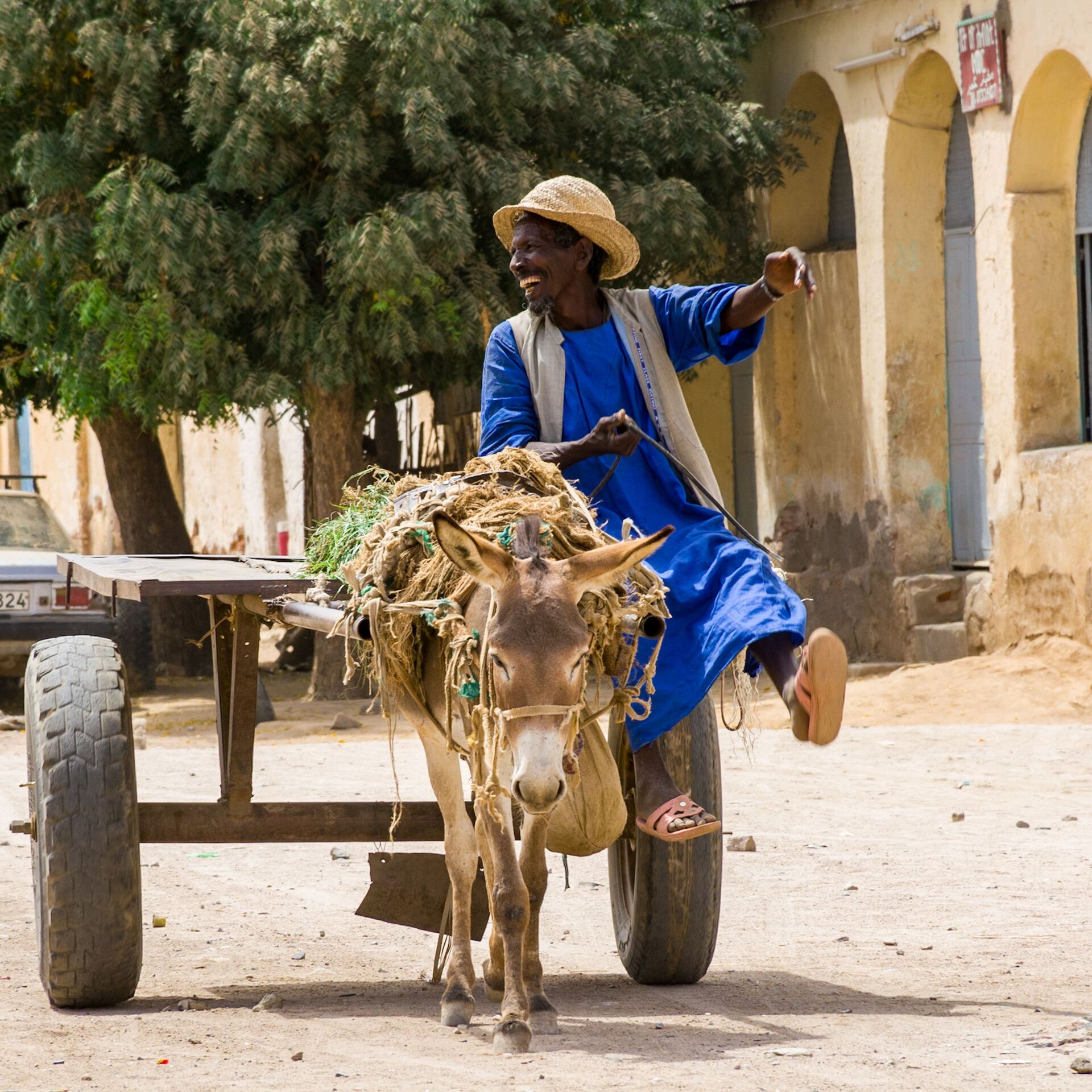
Eritrea
Independence Day: 24 May 1993. Nowhere else on this continent did anybody have to take it by force and win outright. Eritrea did — after thirty years, against two Ethiopian governments, one of them armed by the Soviet Union, with no great power on its side at all. And then the movement that won became the state, and never disbanded the army.
Read the rest of this website and a pattern recurs. Independence is granted, conceded, negotiated, or handed over after a European government decides the cost has become too high. Ghana argued and won. Algeria fought for eight years and France left because Paris broke. The Portuguese colonies became free because officers in Lisbon overthrew their own dictatorship.
Eritrea is the exception.
Eritrea fought for thirty years and defeated its occupier in the field. In May 1991 its fighters walked into Asmara because there was no longer an Ethiopian army in Eritrea to stop them.
It is the only country in Africa of which that is true.
And it is now, by most measures, the most closed society on the continent — no constitution in force, no elections ever held, no parliament since 2010, and a national service with no end date that the United Nations has described as enslavement.
Both of those sentences are about the same people.
Italy took the coast in the 1880s and proclaimed the colony of Eritrea in 1890 — the name from the Greek for the Red Sea.
What Italy built there was not incidental. Asmara became one of the most concentrated collections of modernist architecture anywhere in the world: cinemas, garages, offices and villas in rationalist, futurist and art deco styles, built largely in the 1930s. Italians called it Piccola Roma.
In 2017 Asmara was inscribed as a UNESCO World Heritage Site — an African capital listed for its European modernism, which is its own kind of complicated.
Underneath it was a colonial order with racial legislation, segregated schooling and Eritreans excluded from any position above a certain grade. Italy also raised ascari — Eritrean colonial soldiers — and used them, and used Eritrea itself as the launchpad, for the invasion of Ethiopia in 1935.
That fact matters for everything afterwards. Eritreans fought in the army that conquered Ethiopia, and Ethiopia did not forget it.
Eritrea
Britain defeated the Italians in 1941 and administered Eritrea until 1952.
And it stripped it.
The British Military Administration dismantled and sold off a great deal of the industrial plant the Italians had built — factories, port equipment, the cableway from Massawa to Asmara — and shipped it out as war surplus.
Britain also proposed dividing Eritrea along religious lines, with the Christian highlands going to Ethiopia and the Muslim lowlands to Sudan.
Eritrea's future was settled at the United Nations, and the reasoning was explicit.
The United States wanted a communications and listening station on the Red Sea, and it wanted a friendly Ethiopia to host it. Kagnew Station in Asmara became exactly that.
The American Secretary of State John Foster Dulles later put the calculation on the record in terms that no Eritrean has ever forgotten: that from the point of view of justice the opinion of the Eritrean people had to be taken into account, but that the strategic interest of the United States in the Red Sea and considerations of security made it necessary that the country be linked to Ethiopia.
UN Resolution 390 A (V), on 2 December 1950, federated Eritrea with Ethiopia under the Ethiopian crown.
Eritrea kept its own parliament, its own flag, its own official languages — Tigrinya and Arabic — and its own laws. Ethiopia took defence, foreign affairs and finance.
It lasted ten years.
Haile Selassie removed it piece by piece.
The Eritrean flag was banned. Tigrinya and Arabic were replaced as official languages by Amharic. Eritrean political parties and trade unions were suppressed. The press was censored. Eritrean industries were transferred to Ethiopia. Eritrean officials were replaced by appointees from Addis.
And on 14 November 1962 the Eritrean assembly, surrounded by Ethiopian troops, voted to dissolve itself and its own autonomy.
Eritrea became the fourteenth province of Ethiopia.
A United Nations resolution had created it, and neither the UN nor the United States did anything when it was cancelled.
The war had already started.
On 1 September 1961, near Mount Adal in the western lowlands, Hamid Idris Awate — a former colonial policeman leading a handful of men of the newly formed Eritrean Liberation Front — fired on Ethiopian security forces.
Eritrea marks that date. Awate died the following year.
The ELF had been founded in Cairo in 1960 by exiles. It was pan-Arab in orientation, drew its early base from the Muslim lowlands, and was armed by Syria and Iraq.
In 1970 the Eritrean People's Liberation Front split from it — younger, more secular, drawing on both Christian highlanders and Muslims, Marxist in language, and built on a doctrine of self-reliance.
The two then fought each other.
Eritrea's liberation war contains a civil war inside it, in the 1970s and again in 1980–81, and by 1981 the EPLF had driven the ELF across the border into Sudan. Thousands of Eritreans were killed by other Eritreans, and the ELF's surviving structures never came home. That is not in the official history taught in Asmara, and it belongs on this page.
In 1974 the Ethiopian emperor was overthrown by the Derg, and Mengistu Haile Mariam eventually took control.
In 1977 the Soviet Union switched sides in the Horn — dropping Somalia and arming Ethiopia on an enormous scale. Cuban troops arrived. Ethiopia's army became one of the largest in Africa, with Soviet armour, artillery and aircraft.
And the EPLF — a Marxist movement — found itself fighting a Soviet-backed Marxist state, while the United States backed nobody and the Arab states had backed its rivals.
Eritrea fought the last fifteen years of that war essentially alone.
What it built instead is the source of everything Eritreans believe about themselves.
Around the northern town of Nakfa, held under siege for a decade, the EPLF dug in and constructed an underground state: hospitals cut into hillsides, operating theatres, a pharmaceutical factory, schools, workshops that rebuilt captured tanks, and printing presses — all below ground, out of sight of the Ethiopian air force.
Around a third of the fighters were women, in combat roles, at a time when almost no army in the world did that.
Eritrea's currency is called the nakfa, after that town.
In March 1988 at Afabet, the EPLF destroyed a large Ethiopian force and captured its armour. The historian Basil Davidson compared it to Dien Bien Phu — the moment a guerrilla army stopped being a guerrilla army.
Massawa fell in 1990.
On 24 May 1991 the EPLF entered Asmara. In the same week the Tigrayan-led rebellion took Addis Ababa and the Derg collapsed.
The new Ethiopian government accepted Eritrea's right to decide, and the separation was agreed rather than fought over.
In a UN-monitored referendum from 23 to 25 April 1993, Eritreans voted for independence by 99.83 per cent.
Eritrea declared independence on 24 May 1993 and joined the United Nations four days later.
It was Africa's newest country until South Sudan in 2011, and the only one to alter a colonial-era boundary with the agreement of the state it left — a point the OAU had treated as almost untouchable since 1963.
Isaias Afwerki, the EPLF's secretary-general and military strategist, became president.
He is still president.
A constitution was drafted by a broadly consultative commission and ratified in 1997.
It has never been implemented.
There has never been a national election. No opposition party has ever been permitted. The legislature has not met since 2010.
And the mechanism by which that became permanent was a war nobody expected.
In May 1998, Eritrea and Ethiopia went to war over Badme — a small settlement in a stretch of dry scrubland on an ill-defined border.
The two governments had been allies. The men leading them had fought the Derg together.
What followed was trench warfare on a First World War scale, with massed infantry assaults, artillery and air strikes, over two years.
Estimates of the dead run from around seventy thousand to a hundred thousand.
The Algiers Agreement of December 2000 established an independent boundary commission, whose decisions both parties accepted in advance as final and binding. In 2002 the commission awarded Badme to Eritrea.
Ethiopia refused to implement it.
And the world did nothing, again.
So Eritrea entered a condition its government called no war, no peace: a state of permanent emergency, an unresolved occupation of territory legally awarded to it, and a justification for keeping the entire population mobilised indefinitely.
In May 2001, fifteen senior figures of the ruling party — veterans of the liberation war, former ministers, generals and ambassadors — published an open letter calling for the constitution to be implemented, for elections, and for democratic reform.
They are known as the G-15.
On 18 September 2001, eleven of them were arrested.
They have never been charged. They have never been tried. They have never appeared in public again. Many are believed to have died in detention.
In the same days the government closed the entire private press and arrested its journalists.
One of them was Dawit Isaak, an Eritrean-Swedish writer and part-owner of the newspaper Setit, detained on 23 September 2001.
He has been held without charge or trial ever since.
He is the longest-imprisoned journalist in the world. Sweden, an EU member state, has been asking for its own citizen for twenty-five years.
In 1995 Eritrea introduced national service: eighteen months, six of military training and twelve of national development work.
The eighteen months did not end.
After 1998 it became open-ended, and it has stayed that way. There is no legal discharge mechanism. People have served for a decade, two decades, their entire working lives — assigned to the army, to state farms, to construction, to mines, to ministries, for a nominal allowance that does not support a family.
Secondary school students are sent for their final year to the Sawa military training camp.
In June 2016 the United Nations Commission of Inquiry on Eritrea concluded that the government and the ruling party had committed the crimes of enslavement, imprisonment, enforced disappearance, torture, persecution, rape and murder, and that these amounted to crimes against humanity.
The head of the inquiry estimated that three to four hundred thousand people had been enslaved, and said he believed the government was operating a shoot-to-kill policy on its own borders to prevent people leaving.
And they leave anyway.
Eritrea has for years produced one of the highest per-capita refugee outflows in the world, from a population of a few million. Eritreans have been among the largest national groups crossing the Mediterranean.
The scale shows up in small, revealing ways. Eritrean national sports teams have repeatedly lost players who simply do not return from away fixtures — including after a 2026 Africa Cup of Nations qualifying match.
Reports in early 2025 described authorities ordering the registration and retraining of citizens under sixty, while banning those under fifty from leaving the country — sealing the population in place.
In July 2018 Ethiopia's new prime minister, Abiy Ahmed, announced that Ethiopia would accept the boundary commission's ruling in full.
The border opened. Flights resumed. Families divided for twenty years met at the crossings. Abiy was awarded the Nobel Peace Prize in 2019.
Inside Eritrea, nothing changed.
National service was not ended. The constitution was not implemented. No elections were called. The G-15 were not produced. Dawit Isaak was not released.
The war had been the stated reason for all of it. The war ended, and the reason was not required.
The border quietly closed again.
In November 2020, war broke out between the Ethiopian federal government and the authorities of Tigray — the region whose leadership had dominated Ethiopia for the previous quarter-century, and which Isaias Afwerki regarded as his principal enemy.
Eritrean forces entered Ethiopia and fought alongside the federal army.
The documentation is extensive and it comes from the United Nations, Amnesty International, Human Rights Watch and the UN-mandated International Commission of Human Rights Experts on Ethiopia. It includes massacres of civilians at Axum and Dengelat, indiscriminate shelling, pillage, mass abduction, and sexual violence including sexual slavery.
The Commission found war crimes and crimes against humanity by multiple parties, and found both Ethiopian and Eritrean forces responsible for sexual slavery.
Eritrea denied involvement for months while its soldiers were being filmed inside Tigray.
A cessation of hostilities was agreed in November 2022 between Ethiopia and the Tigrayan authorities. Eritrea was not a party to it, and Eritrean forces are reported to remain in parts of Tigray, where abuses have continued.
Around 800,000 people remain displaced inside Tigray.
The current danger is the reverse of 1993.
Ethiopia lost its coastline when Eritrea became independent, and has been landlocked ever since, routing essentially all of its trade through Djibouti at enormous cost.
Abiy Ahmed has made sea access a central national objective. On 1 September 2025 he said publicly that losing the port of Assab had been a mistake — and that the mistake would be corrected. Senior Ethiopian officers, including the army chief of staff, have suggested it could be taken by force.
Eritrea's position is that the matter is legally settled and that Ethiopia is inciting war.
Both countries have been mobilising. Human Rights Watch's 2026 report records the escalation directly.
And Assab sits in the territory of the Afar, who live on both sides of the border. In December 2025 Afar conferences issued a declaration of intent to establish autonomy in their historical territories, and condemned what they described as crimes against humanity committed against them by the Eritrean state.
A country that fought thirty years for a coastline may be about to fight over it again — and the people who actually live there have declared that neither government speaks for them.
Because Eritrea is the hardest question in this entire series.
Every other page can point at somebody else. A European power that drew a line, installed a client, funded a dictator, refused to leave. Here you cannot.
Eritreans did this themselves, and they did it from a position of total moral advantage. They were annexed in defiance of a United Nations resolution, abandoned by the organisation that had created their status, and told in writing that American strategic interest outweighed their opinion. They then fought for thirty years, alone, against a superpower-armed army, and won.
Nobody in Africa has a stronger claim to have earned their state.
And what it produced is a country with no constitution in force, no elections, no parliament, no private press, a service obligation the UN calls enslavement, its most famous journalist held without charge for twenty-five years, and an army that has been accused of massacres in a neighbouring country.
The liberation front became the government and never stopped being an army. The trenches at Nakfa, the underground hospitals, the discipline, the self-reliance, the suspicion of outsiders — all of it was a magnificent way to survive a war, and all of it was carried intact into peacetime and applied to a civilian population.
That is the lesson, and it is not only an Eritrean one.
There are things that should be said in Eritrea's defence, and they are not small.
Eritrea was wronged, repeatedly, by the international community. Its federation was dissolved in breach of the resolution that created it, and nothing was done. Its boundary award in 2002 was final and binding by agreement, and Ethiopia refused it for sixteen years, and nothing was done. A government that concludes the outside world will not enforce its own decisions is not being paranoid.
Corruption of the kind documented in Equatorial Guinea or Congo-Brazzaville is not the charge here. Isaias Afwerki does not have a yacht. There is no Avenue Foch mansion. The regime is austere, and its austerity is genuine and ideological, which makes it in some ways harder to shift than a kleptocracy.
And ethnic and religious violence, which has torn apart almost every neighbour, has not happened here. Eritrea has nine recognised ethnic groups and is roughly half Christian and half Muslim, and the EPLF's insistence on a single national identity above all of them — whatever its costs — has held.
None of that justifies the G-15, or Dawit Isaak, or Sawa, or Axum.
Two things are true. Eritrea's grievance against the world is real and largely unanswered. And Eritrea's government has spent thirty-three years doing to its own people things it fought thirty years to stop being done to them.
There is a UNESCO World Heritage city built by Italian fascists.
There is a resolution passed at the United Nations in 1950 that created a federation, and a silence when it was destroyed twelve years later.
There is a sentence in the American diplomatic record about strategic interest outweighing the opinion of a people.
There are hospitals and schools cut into hillsides at Nakfa, which kept a nation alive underground for a decade, and a currency named after the town.
There is a binding boundary award from 2002 that took sixteen years to be accepted and settled nothing.
There are eleven people arrested on 18 September 2001 who have not been seen since.
There is a Swedish citizen who has been held without charge since 23 September 2001.
There is a football team that comes home with fewer players than it left with.
And there is a port called Assab, which Ethiopia says was lost by mistake and intends to correct.
Updated and fact-checked: 12 September 2026.
How this page was checked. Dates and events were verified against the sources listed above. The Italian colonisation and proclamation of Eritrea in 1890, the British Military Administration of 1941–1952, United Nations Resolution 390 A (V) of 2 December 1950 federating Eritrea with Ethiopia, the dismantling of the federation and the annexation of Eritrea as a province in November 1962, the opening of the armed struggle by Hamid Idris Awate on 1 September 1961, the founding of the ELF in Cairo in 1960 and the EPLF split in 1970, the internal Eritrean fighting of the 1970s and 1980–81, the Ethiopian revolution of 1974 and subsequent Soviet support for the Derg, the battle of Afabet in 1988, the capture of Asmara on 24 May 1991, the referendum of 23–25 April 1993 with a result of 99.83 per cent, the declaration of independence on 24 May 1993, the ratification of the 1997 constitution and its non-implementation, the 1998–2000 border war and the 2000 Algiers Agreement, the 2002 boundary commission award of Badme to Eritrea and Ethiopia's refusal to implement it, the arrests of the G-15 and of journalists including Dawit Isaak in September 2001, the last sitting of the legislature in 2010, the June 2016 UN Commission of Inquiry findings, Abiy Ahmed's acceptance of the boundary ruling in July 2018, Eritrean participation in the Tigray war from November 2020, and Abiy Ahmed's statement of 1 September 2025 regarding Assab are as recorded. Casualty figures are estimates and are given as ranges: the 1998–2000 border war is generally estimated at between 70,000 and 100,000 dead; the number of people subject to indefinite national service was estimated by the head of the UN Commission of Inquiry at between 300,000 and 400,000. Findings of crimes against humanity and of atrocities in Tigray are those of the United Nations Commission of Inquiry on Eritrea, the International Commission of Human Rights Experts on Ethiopia, Amnesty International and Human Rights Watch; the Eritrean government rejects them and has denied access to United Nations mandate holders. Both positions are recorded. Statements attributed to John Foster Dulles regarding United States strategic interest in the Red Sea are as reported in the historical literature on the 1950 settlement. No individual has been tried in connection with the detention of the G-15 or of Dawit Isaak, and no charges have ever been brought against them. This page makes no allegation against any living person beyond matters already on the public record.
Written and researched by Remo Kurka · africanindependence.com
We strive to unify diverse narratives from across Africa, showcasing the continent's shared heritage and unique stories.
Our mission is to honor and preserve the history of African cultures and independence movements for future generations.
We provide a platform for innovative exchange of ideas, resources, and insights, understanding that knowledge should be accessible to all.