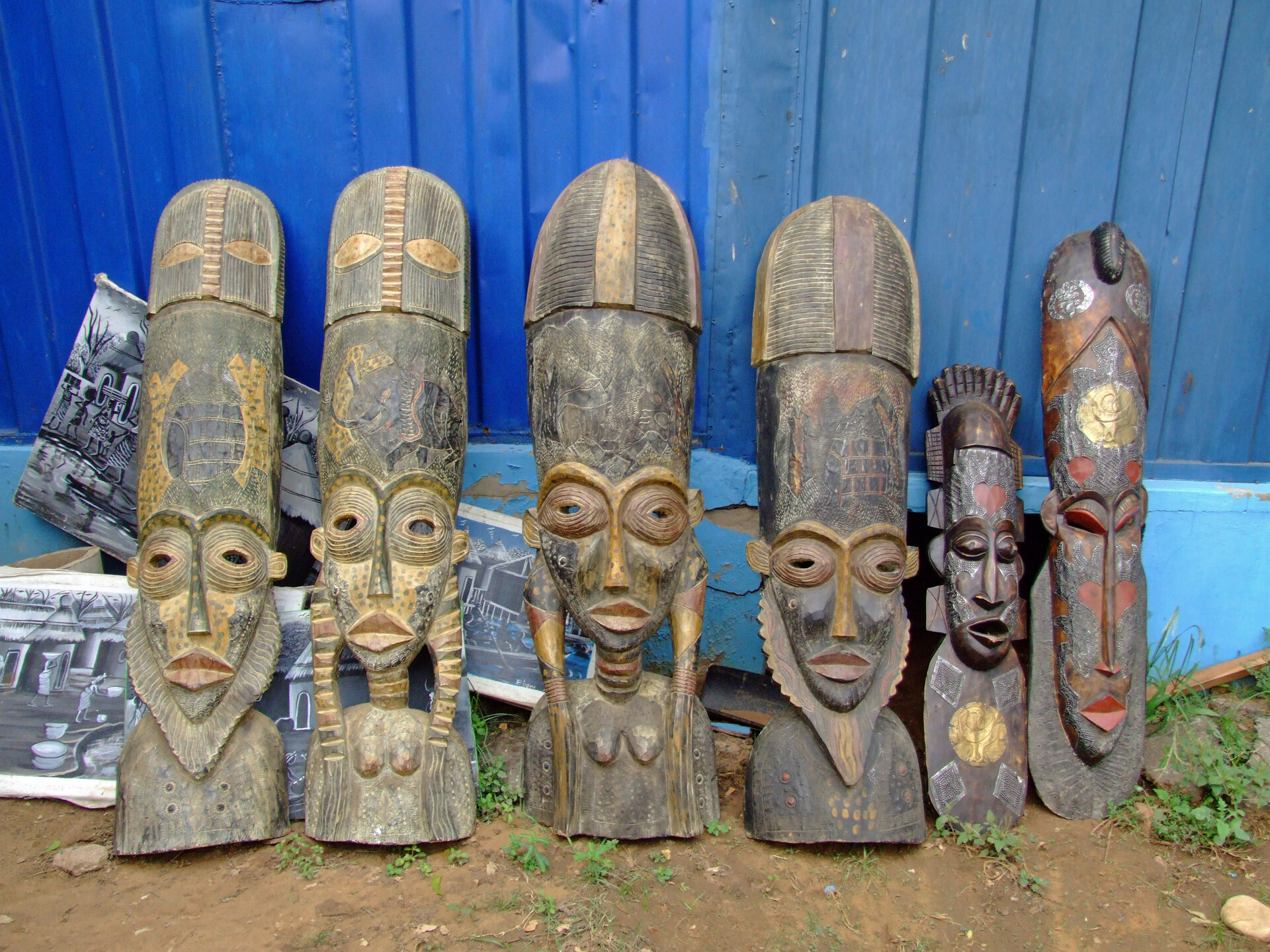
Photo: West African masks. West Africa is home to some of Africa's oldest kingdoms, legendary empires, remarkable museums and living traditions that continue to shape the continent today.
"West Africa is not a chapter of African history. It is one of its greatest libraries—where kingdoms flourished, knowledge travelled across deserts, and traditions continue to inspire the world."
West Africa is a region of extraordinary diversity.
Stretching from the Atlantic Ocean to the edge of the Sahara, it is home to rainforests, savannahs, great rivers and bustling coastal cities. More importantly, it is home to some of the most influential civilisations in African history.
Long before European ships reached the Atlantic coast, powerful kingdoms and empires had already transformed the region into a centre of trade, scholarship, craftsmanship and political organisation.
The empires of Ghana, Mali and Songhai became famous for their wealth and influence. Cities such as Timbuktu, Djenné and Gao attracted scholars from across the Islamic world. Along the coast, kingdoms such as Dahomey, Asante, Oyo and Benin developed sophisticated systems of government, art and diplomacy.
West Africa also carries the profound legacy of the Atlantic slave trade, whose impact continues to shape families and societies across Africa and the wider world.
Its museums, monuments and heritage sites tell stories of creativity, resilience, achievement and remembrance.
Photo: West African masks. West Africa is home to some of Africa's oldest kingdoms, legendary empires, remarkable museums and living traditions that continue to shape the continent today.
To understand West Africa is to understand one of the foundations of African civilisation.
Its museums preserve:
Its heritage sites remind visitors that Africa has always been a continent of innovation, exchange and cultural richness.
The Republic of Benin is the successor to one of West Africa's most influential historical states: the Kingdom of Dahomey.
Its kings built powerful political institutions and became renowned for their distinctive royal traditions, elaborate ceremonies and artistic achievements.
The Royal Palaces of Abomey are among Africa's most important historical sites.
Built over several centuries, they preserve the story of twelve successive kings through architecture, bas-reliefs and ceremonial spaces.
The site reflects both the achievements of the kingdom and the complex history of warfare, diplomacy and the Atlantic slave trade.
Benin's museums increasingly showcase not only archaeological collections but also the return of cultural treasures that had been held abroad for generations.
This ongoing process of cultural restitution has become a powerful symbol of historical recognition and national identity.
Burkina Faso's cultural heritage is rooted in its remarkable ethnic diversity and artistic traditions.
Rather than grand monuments alone, much of its heritage survives through music, storytelling, architecture and craftsmanship.
Located in Ouagadougou, the National Museum introduces visitors to the country's peoples, traditions and archaeological discoveries.
Exhibitions include traditional masks, musical instruments, ceremonial objects and everyday artefacts representing communities from across the country.
Hidden in the south-west of the country, the stone ruins of Loropéni remain one of West Africa's great archaeological mysteries.
Recognised as a UNESCO World Heritage Site, they are believed to have played an important role in regional gold trade networks.
Although located hundreds of kilometres off the African mainland, Cabo Verde occupies an important place in Atlantic history.
Its islands became crossroads linking Africa, Europe and the Americas.
The historic town of Cidade Velha preserves the oldest European colonial settlement in the tropics.
Its churches, fortifications and public spaces reflect centuries of maritime history.
Museums throughout the islands also celebrate music, migration and the rich Creole culture that defines modern Cabo Verde.
Côte d'Ivoire is internationally recognised for its artistic heritage.
Wood carving, ceremonial masks and traditional sculpture have influenced artists around the world.
Located in Abidjan, the museum presents collections representing the country's many cultural communities.
Visitors encounter ceremonial masks, royal regalia, musical instruments and archaeological artefacts that illustrate the country's remarkable diversity.
Beyond museums, Côte d'Ivoire preserves sacred forests, ceremonial villages and cultural landscapes where traditions continue to thrive.
The Gambia's history is inseparable from the River Gambia.
For centuries it served as a trade route connecting inland kingdoms with the Atlantic coast.
Formerly known as James Island, this UNESCO World Heritage Site stands as one of West Africa's most powerful reminders of the Atlantic slave trade.
Nearby forts and trading posts help explain one of history's most painful chapters.
Located in Banjul, the museum introduces visitors to archaeology, ethnography and the country's colonial and post-independence history.
Despite its modest size, it provides valuable context for understanding one of Africa's smallest nations.
Few countries combine ancient kingdoms, colonial history and modern African identity as successfully as Ghana.
Its museums reflect thousands of years of cultural development, while its heritage sites tell stories that resonate far beyond national borders.
Located in Accra, the National Museum presents archaeological discoveries, ethnographic collections and exhibitions exploring Ghana's journey from ancient communities to independence.
These UNESCO World Heritage Sites are among Africa's most visited historical landmarks.
They preserve difficult but essential memories of the Atlantic slave trade and serve as places of reflection for visitors from around the world.
In Kumasi, the Manhyia Palace Museum introduces visitors to the continuing history of the Ashanti Kingdom.
Unlike many historic kingdoms, Asanteman remains a living traditional institution whose cultural influence continues to shape modern Ghana.
Traditional ceremonies, festivals and the authority of the Asantehene demonstrate the enduring importance of this remarkable royal heritage.
Guinea is often described as the "Water Tower of West Africa" because the headwaters of many of the region's great rivers begin in its highlands. Yet beyond its spectacular landscapes lies a cultural heritage that remains one of West Africa's least explored.
For centuries, Guinea has been home to powerful kingdoms, vibrant trading communities and diverse peoples whose traditions continue to shape everyday life.
From the Fouta Djallon Highlands to the forests of the southeast, Guinea's heritage reflects centuries of migration, Islamic scholarship, traditional beliefs and remarkable cultural resilience.
Located in the capital, Conakry, the National Museum of Guinea introduces visitors to the country's rich cultural diversity.
Its collections include traditional masks, musical instruments, ceremonial objects, archaeological discoveries and historical artefacts representing Guinea's many ethnic communities, including the Fulani (Peul), Malinké, Soussou, Kissi, Toma (Loma) and others.
The museum offers valuable insight into the traditions that continue to influence modern Guinea.
Shared with Côte d'Ivoire, Mount Nimba is recognised as a UNESCO World Heritage Site for both its exceptional biodiversity and cultural significance.
Its dramatic mountain landscapes shelter rare wildlife while local communities continue to maintain traditions connected with the surrounding environment.
Unlike countries where heritage is concentrated mainly within museums, Guinea's traditions remain deeply woven into everyday life.
Visitors can experience colourful weekly markets, traditional music performed on the kora and balafon, village ceremonies, local craftsmanship and a hospitality that reflects the country's strong sense of community.
Guinea's heritage is not only preserved—it is lived.
Although one of Africa's smallest countries, Guinea-Bissau possesses a remarkable cultural diversity.
More than thirty ethnic communities contribute to its traditions, languages and artistic expressions, creating a vibrant heritage shaped by centuries of interaction between inland societies and the Atlantic coast.
The National Ethnographic Museum in Bissau preserves artefacts representing the country's many cultural communities.
Traditional masks, ceremonial objects, musical instruments and everyday tools help explain the rich diversity of life across Guinea-Bissau.
One of West Africa's most remarkable cultural landscapes, the Bijagós Archipelago combines exceptional biodiversity with unique island traditions.
Many communities continue to observe ceremonies, social structures and spiritual practices that have survived for generations.
Visitors quickly discover that heritage here is inseparable from nature.
Liberia occupies a unique place in African history.
Founded during the nineteenth century by formerly enslaved African Americans, it became Africa's first modern republic to maintain its independence throughout the colonial era.
Its heritage reflects both indigenous traditions and the complex story of return, nation-building and resilience.
Situated in Monrovia, the National Museum preserves artefacts documenting Liberia's indigenous peoples alongside exhibitions exploring the country's modern political history.
Traditional regalia, ceremonial masks, historical documents and archaeological collections together illustrate Liberia's remarkable journey.
Often regarded as the birthplace of modern Liberia, Providence Island marks the arrival of the first settlers in 1822.
Today it serves as an important historic site connecting African, American and diaspora history.
Following years of civil conflict, Liberia continues to rebuild and strengthen its museums and cultural institutions.
Protecting heritage has become part of the country's wider effort to preserve memory while building a peaceful future.
Few countries have influenced African history as profoundly as Mali.
During the Middle Ages, the Mali Empire became one of the wealthiest and most influential states in the world.
Its rulers controlled vast trade routes across the Sahara, while cities such as Timbuktu and Djenné became internationally renowned centres of scholarship, religion and commerce.
Located in Bamako, the National Museum of Mali is among West Africa's finest museums.
Its collections celebrate archaeology, traditional textiles, musical heritage, ancient manuscripts and the remarkable diversity of Mali's peoples.
Visitors gain an appreciation of both the country's ancient civilisations and its vibrant contemporary culture.
For centuries, Timbuktu symbolised knowledge.
Its historic mosques, libraries and manuscript collections attracted scholars from across Africa and the Islamic world.
Although conflict has threatened parts of this heritage in recent years, restoration efforts continue to protect one of Africa's greatest intellectual legacies.
The Great Mosque of Djenné, constructed from sun-dried mud bricks, remains one of the world's finest examples of Sudano-Sahelian architecture.
Each year, the local community gathers to replaster the mosque in a remarkable demonstration of living heritage.
Here, architecture is not simply preserved.
It continues to bring communities together.
Mauritania's identity has been shaped by the desert.
For centuries, camel caravans crossed the Sahara carrying gold, salt, manuscripts and ideas between North and West Africa.
The country preserves several historic caravan towns that once flourished as centres of trade and Islamic scholarship.
The ancient settlements of Chinguetti, Ouadane, Tichitt and Oualata form one of Africa's most remarkable UNESCO World Heritage Sites.
These desert towns preserve ancient libraries, mosques and traditional architecture that illustrate the importance of trans-Saharan commerce.
Located in Nouakchott, the National Museum presents archaeological discoveries, Islamic heritage and ethnographic collections documenting the country's diverse peoples and desert traditions.
Niger occupies one of Africa's largest territories, much of it covered by the Sahara Desert.
Its history reflects centuries of caravan trade linking West Africa with North Africa and beyond.
Widely regarded as one of West Africa's most interesting museums, the National Museum in Niamey combines archaeology, ethnography, traditional architecture, zoology and cultural exhibitions within an open-air setting.
Visitors experience both museum collections and reconstructed traditional villages representing Niger's many communities.
The historic city of Agadez became one of the Sahara's most important caravan centres.
Its distinctive mud-brick mosque and old town continue to reflect centuries of commerce and cultural exchange.
With more than 250 ethnic groups and one of the continent's largest populations, Nigeria possesses one of Africa's richest cultural landscapes.
Its museums preserve extraordinary artistic traditions alongside archaeological discoveries that continue to reshape our understanding of African history.
The National Museum in Lagos houses one of West Africa's most significant collections.
Its exhibitions include Nok terracotta sculptures, Benin bronzes, royal regalia, archaeological discoveries and ethnographic artefacts representing communities from across Nigeria.
The Kingdom of Benin produced some of the finest bronze sculptures ever created.
The famous Benin Bronzes demonstrate an extraordinary level of artistic sophistication and continue to play an important role in international discussions about cultural restitution.
Located in northeastern Nigeria, Sukur became the country's first UNESCO World Heritage Site.
Its terraced hillsides, traditional settlements and cultural practices continue to reflect centuries of adaptation to a challenging landscape.
Nigeria reminds visitors that African history is as much a story of artistic achievement as it is of political power.
Senegal has long stood at the crossroads of Africa.
For centuries, traders crossed its rivers and savannahs, scholars gathered in Islamic learning centres, fishermen launched their colourful pirogues along the Atlantic coast, and kingdoms flourished long before the arrival of European powers.
Today, Senegal is recognised as one of West Africa's most culturally vibrant nations, where history remains deeply connected to everyday life.
Its museums and heritage sites tell stories of ancient kingdoms, colonial rule, the Atlantic slave trade, independence, art and modern African identity.
Located in the heart of Dakar, the Museum of Black Civilisations is one of Africa's most ambitious cultural institutions.
Rather than focusing solely on Senegal, it celebrates the achievements of African peoples and the global African diaspora.
Its exhibitions explore African history, traditional cultures, archaeology, contemporary art and the worldwide influence of African civilisation.
The museum serves as both a national institution and a continental symbol of African cultural pride.
Established in the 1930s, the IFAN Museum remains one of West Africa's oldest and most respected museums.
Its extensive collections include masks, sculptures, textiles, musical instruments and ceremonial objects from across West Africa.
For anyone wishing to understand the artistic diversity of the region, it remains an essential destination.
Few places in Africa evoke such powerful emotions as Gorée Island.
Located just off the coast of Dakar, the island became one of the best-known symbols of the Atlantic slave trade.
Although historians continue to debate the precise scale of deportations from Gorée itself, its House of Slaves has become an international memorial to the millions of Africans who suffered through the transatlantic slave trade.
Visitors from around the world come not only to learn about history but also to reflect upon one of humanity's darkest chapters.
Founded during the seventeenth century, Saint-Louis became one of French West Africa's most important colonial cities.
Its elegant architecture, iron balconies and riverside setting reflect centuries of interaction between African and European cultures.
Today, the historic island city remains a UNESCO World Heritage Site and one of West Africa's finest examples of colonial urban planning.
Shared between Senegal and The Gambia, the Stone Circles of Senegambia represent one of Africa's greatest archaeological mysteries.
Thousands of carefully arranged stone pillars mark ancient burial grounds whose exact origins continue to fascinate researchers.
These remarkable monuments remind visitors that sophisticated societies flourished across West Africa long before written records became widespread.
Senegal's cultural heritage extends far beyond museums and monuments.
Music fills the streets of Dakar.
Traditional wrestling attracts passionate audiences.
Storytellers preserve oral histories.
Craftsmen continue centuries-old artistic traditions.
Hospitality remains one of the country's defining characteristics.
In Senegal, heritage is experienced as much through its people as through its historic sites.
Sierra Leone occupies a unique place in African history.
Its modern capital, Freetown, was established during the late eighteenth century as a settlement for formerly enslaved Africans returning from Britain, North America and the Caribbean.
This remarkable history, combined with the country's many indigenous cultures, has created a rich and diverse heritage.
Located in Freetown, the National Museum introduces visitors to the country's archaeological discoveries, traditional leadership, ceremonial regalia and independence history.
Among its most treasured exhibits are the historic crowns of Paramount Chiefs, symbolising the enduring role of traditional authority within Sierra Leonean society.
Situated along the Sierra Leone River, Bunce Island served as one of Britain's principal slave trading forts in West Africa.
Although its ruins have been reclaimed by nature, they remain a powerful reminder of the Atlantic slave trade and the lives forever changed by it.
Restoration and conservation projects continue to preserve the island for future generations.
Founded in 1827, Fourah Bay College is one of the oldest institutions of higher education in sub-Saharan Africa.
Often referred to as the "Athens of West Africa," it educated generations of African scholars, clergy, teachers and political leaders who later contributed to independence movements across the continent.
Its heritage extends beyond architecture to its enormous intellectual influence.
Across Sierra Leone, traditional ceremonies, music, carving, weaving and storytelling continue to strengthen community life.
Despite the hardships of civil war in recent decades, the country's cultural heritage has remained remarkably resilient.
Today, Sierra Leone continues rebuilding its museums, archives and historic sites while celebrating the traditions that have long united its communities.
Although one of West Africa's smaller nations, Togo possesses a remarkably diverse cultural landscape.
More than forty ethnic communities contribute to the country's traditions, languages and artistic heritage.
Situated between Ghana and Benin, Togo has long served as a meeting place for different cultures and trading networks.
Located in Lomé, the National Museum presents archaeological discoveries alongside ethnographic collections representing the country's many peoples.
Traditional musical instruments, ceremonial objects, jewellery, pottery and textiles illustrate the cultural richness that characterises modern Togo.
The museum provides an excellent introduction to the country's history from prehistoric times through independence.
Recognised as a UNESCO World Heritage Site, Koutammakou is one of Africa's most distinctive cultural landscapes.
Its famous mud tower houses, known as takienta, remain both family homes and architectural masterpieces.
Rather than existing as an open-air museum, Koutammakou continues to function as a living cultural landscape where traditional knowledge is passed from one generation to the next.
Visitors quickly discover that architecture here reflects not only practical needs but also spiritual beliefs, family structures and community identity.
Across Togo, festivals, music, dance and craftsmanship continue to preserve traditions that have endured for centuries.
Markets remain centres of commerce and social life, while artisans produce textiles, wood carvings and pottery using techniques inherited from earlier generations.
Like many West African nations, Togo demonstrates that heritage is not confined to museums.
It lives within its communities.
Although each West African nation possesses its own unique history, several themes unite the region.
Across its museums and heritage sites, visitors encounter the stories of powerful kingdoms, flourishing empires, long-distance trade routes and remarkable artistic traditions.
The region preserves the memory of ancient centres of learning, including Timbuktu and Djenné, alongside royal capitals such as Kumasi, Abomey and Benin City.
It also safeguards places of remembrance connected to the Atlantic slave trade, including Gorée Island, Cape Coast Castle, Elmina Castle, Bunce Island and Kunta Kinteh Island.
Yet West Africa's heritage is not only about the past.
Its music continues to influence the world.
Its festivals celebrate living traditions.
Its craftsmen preserve centuries-old skills.
Its museums increasingly combine archaeology with contemporary African creativity.
Above all, West Africa reminds visitors that history is not simply remembered.
It continues to shape the present.
Across the region, governments, universities, local communities and international organisations continue working to preserve irreplaceable cultural treasures.
Many museums are expanding their collections and modernising their exhibitions.
Historic buildings are being restored.
Traditional festivals are receiving renewed recognition.
At the same time, important conversations continue about the return of African cultural objects held in museums overseas.
For many West African nations, preserving heritage is not only about protecting monuments.
It is about reclaiming historical narratives, celebrating cultural identity and ensuring that future generations understand the remarkable achievements of those who came before them.
West Africa is often introduced through a single story.
In reality, it contains thousands.
It is the land of legendary empires and royal kingdoms.
Of scholars whose manuscripts travelled across deserts.
Of artists whose bronze sculptures and masks are admired throughout the world.
Of communities whose music, languages and traditions continue to inspire new generations.
Its museums preserve priceless objects.
Its heritage sites safeguard places of memory.
But the true strength of West Africa lies in its living cultures.
Visitors leave with photographs of castles, mosques and palaces.
They return home remembering conversations in village squares, the rhythm of drums at festivals, the warmth of local hospitality and the pride with which communities continue to protect their heritage.
To explore West Africa is not simply to discover history.
It is to discover one of the great cultural heartlands of the African continent.
Part of the African Independence Knowledge Series — helping visitors discover, understand and explore Africa through its history, heritage, cultures and peoples.
Continue your journey with:
We strive to unify diverse narratives from across Africa, showcasing the continent's shared heritage and unique stories.
Our mission is to honor and preserve the history of African cultures and independence movements for future generations.
We provide a platform for innovative exchange of ideas, resources, and insights, understanding that knowledge should be accessible to all.