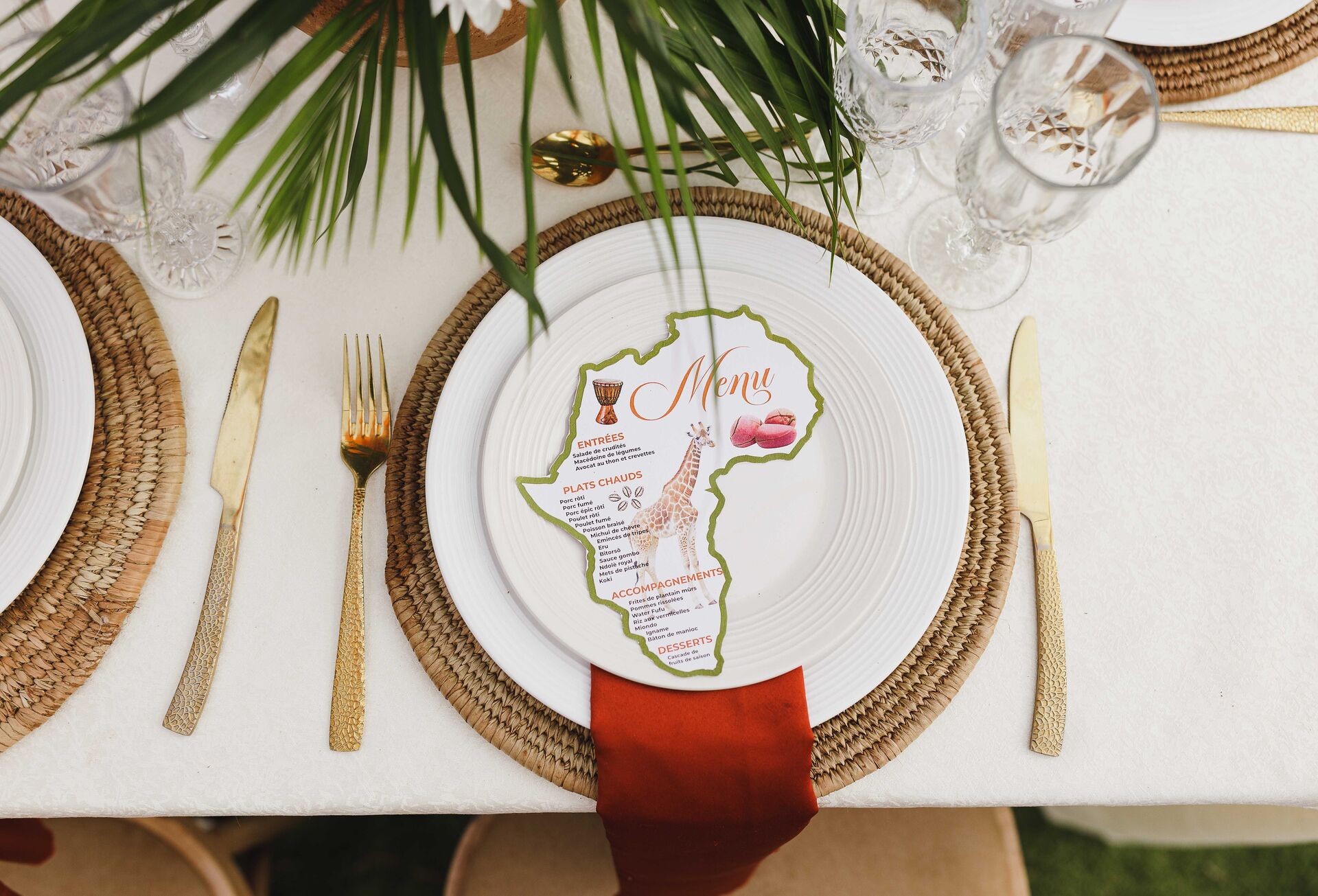
"A wedding is not only the union of two people. It is the meeting of families, histories and generations."
For millions of Africans living around the world, a wedding is not only a personal celebration.
It is also a journey back.
Back to the country of their parents or grandparents.
Back to ancestral landscapes.
Back to languages, traditions, foods and ceremonies that shaped their identity.
In recent years, an increasing number of members of the African diaspora have chosen to celebrate their weddings in their countries of origin.
Some travel to Ghana, Senegal, Nigeria, Kenya, Ethiopia, Côte d'Ivoire, South Africa, Morocco or other African nations to marry in places connected to their family history.
Others choose villages, historic locations, beaches, cultural centres or family hometowns that hold emotional meaning.
For many couples, the decision is not simply about finding a beautiful wedding location.
It is about answering a deeper question:
Where does our story truly begin?
Across Africa, marriage has traditionally been understood as more than a relationship between two individuals.
It is often a connection between families, communities and generations.
A wedding brings together:
The celebration becomes a moment where the past meets the future.
Many African cultures view marriage as a relationship that extends beyond the couple themselves.
The family becomes part of the journey.
The community becomes part of the celebration.
The ancestors and heritage of previous generations remain part of the story.
For many people of African descent living abroad, returning home for a wedding carries a powerful emotional meaning.
Diaspora communities around the world often maintain connections with Africa through:
A wedding can become one of the strongest moments to reconnect with those roots.
Instead of asking:
"Where should we have our wedding?"
many couples are asking:
"Where do we want our story to be connected?"
For descendants of Africans who migrated, were displaced or built new lives abroad, returning to Africa can represent reconnection.
The continent is not only a place on a map.
It represents identity, history and belonging.
For some couples, the wedding becomes an opportunity to honour ancestors and acknowledge the journeys that brought their families to where they are today.
A ceremony in Africa can feel like completing a circle:
A family history that began on the continent continues across oceans and generations.
Ghana has become one of the most recognised destinations for diaspora weddings.
The country's history, especially its role in the Atlantic slave trade and African independence movement, gives many visitors a strong emotional connection.
For many members of the African diaspora, Ghana represents both pain and resilience:
Many diaspora visitors describe Ghana as a place where they feel connected, even if they are visiting for the first time.
Nigeria's weddings are famous worldwide for their scale, creativity and energy.
Traditional ceremonies often combine:
Nigerian diaspora weddings often blend traditional ceremonies with modern celebrations abroad.
Returning to Nigeria allows couples to experience these traditions surrounded by extended family and community.
Senegalese weddings often reflect strong family values, hospitality and cultural pride.
Traditional clothing, music, food and ceremonies create celebrations that connect generations.
For diaspora families, Senegal can represent a return to cultural foundations and family heritage.
Across East Africa, wedding traditions vary enormously between communities.
Many celebrations include:
For diaspora couples, these traditions offer a way to celebrate modern love while honouring centuries of heritage.
One major reason diaspora couples choose Africa is family.
Living abroad often means families are spread across countries and continents.
A wedding in Africa can bring everyone together in one place:
The wedding becomes more than one day.
It becomes a family reunion.
Many people remember weddings through the senses.
The smell of traditional dishes.
The sound of drums and music.
The colours of clothing.
The rhythm of dancing.
The voices of relatives sharing stories.
African weddings often create powerful cultural experiences because they combine celebration with memory.
Food is not only food.
Music is not only entertainment.
Clothing is not only fashion.
They are expressions of identity.
One of the most visible parts of many African weddings is traditional clothing.
Fabrics, colours and designs often carry cultural meaning.
Examples include:
For many couples, wearing traditional clothing is a statement:
"We are proud of where we come from."
Today's diaspora weddings often combine several worlds.
A couple may:
Modern African weddings are not about choosing between tradition and modernity.
They often show how both can exist together.
For some visitors, an African wedding may look like a destination wedding.
But for many diaspora couples, the meaning is different.
A destination wedding is often about discovering somewhere new.
A homecoming wedding is about rediscovering somewhere connected to identity.
The location itself becomes part of the story.
A beach, village, city or historic site is not simply a background.
It becomes a chapter in the family's history.
Diaspora weddings also contribute to local communities.
They support:
Beyond economics, they strengthen cultural connections.
They create opportunities for younger generations to experience traditions they may only have heard about from relatives.
A meaningful African wedding also requires preparation.
Couples planning from abroad may face challenges:
Successful celebrations usually depend on working with trusted local partners and respecting the communities involved.
Africa is not a fantasy setting.
It is a living continent with modern cities, traditions, challenges and extraordinary diversity.
The most memorable celebrations are those built on genuine connection and respect.
The growing number of diaspora weddings in Africa reflects something larger.
A new generation is redefining its relationship with the continent.
For many young Africans and people of African descent around the world, identity is becoming increasingly connected across borders.
They may have grown up in London, Paris, New York, Toronto or Berlin.
But they still carry histories, cultures and family connections that lead back to Africa.
The wedding becomes a powerful expression of that connection.
Every wedding tells a story.
African diaspora weddings tell many stories at once:
The story of two people choosing each other.
The story of families crossing generations.
The story of migration and return.
The story of traditions surviving and evolving.
The story of a continent whose influence reaches far beyond its borders.
For many couples, saying "I do" in Africa is not simply a celebration of love.
It is a celebration of belonging.
Africa is not only the place where many family histories began.
It is also a place where new chapters are being written.
Every year, couples from around the world return to African countries to celebrate love, culture and connection.
They come for the beauty.
They come for the traditions.
They come for their families.
But most importantly, many come because somewhere deep inside, they feel that a part of their story belongs there.
A wedding in Africa is more than a ceremony.
It is a bridge between generations.
A bridge between continents.
A bridge between the past and the future.
Part of the Pan-African Knowledge Network — helping visitors discover, understand and explore Africa through culture, history, people and places.
Continue your journey soon, with:
We strive to unify diverse narratives from across Africa, showcasing the continent's shared heritage and unique stories.
Our mission is to honor and preserve the history of African cultures and independence movements for future generations.
We provide a platform for innovative exchange of ideas, resources, and insights, understanding that knowledge should be accessible to all.