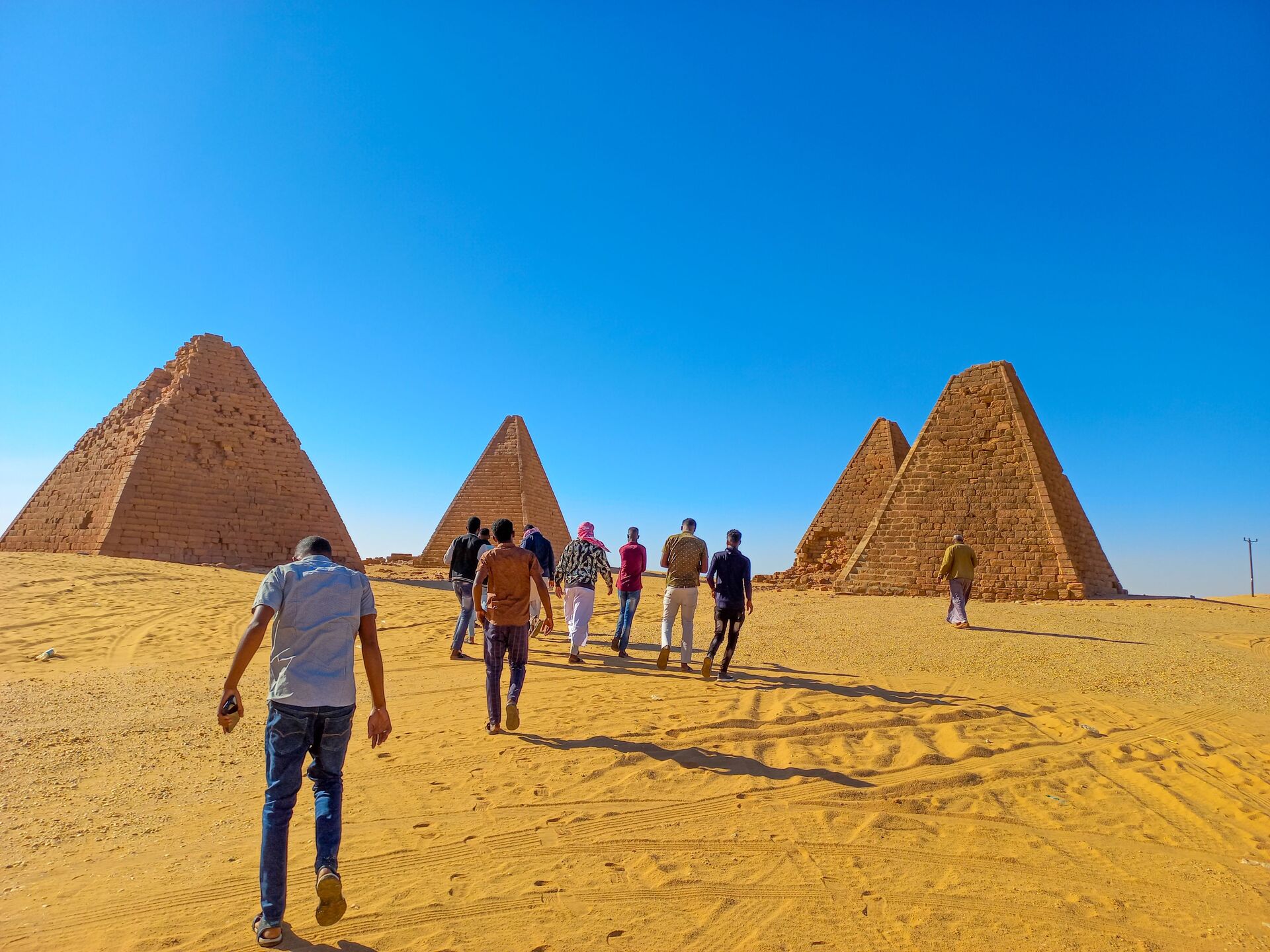
Photo: Sudan. North Africa preserves one of the world's richest collections of ancient monuments, archaeological sites and living cultural traditions, connecting Africa with the Mediterranean, the Middle East and the Sahara.
"Museums preserve objects. Heritage preserves identity. Across North Africa, every monument, medina and archaeological site tells another chapter in the remarkable story of Africa."
North Africa occupies a unique place in world history.
For thousands of years, the region has served as a meeting point between Africa, Europe and the Middle East. Civilisations rose and fell along the Mediterranean coast, while caravans crossed the Sahara carrying gold, salt, manuscripts and ideas between North and West Africa.
Here, visitors can explore some of humanity's oldest surviving monuments, walk through Roman cities remarkably preserved for nearly two thousand years, wander labyrinthine medinas that still thrive today and discover museums housing treasures spanning prehistoric times to the modern era.
Yet North Africa is far more than its ancient past.
Its heritage is alive.
Traditional markets continue centuries-old trading customs. Craftsmen shape leather, ceramics and metal using techniques passed down through generations. Call to prayer echoes through historic cities where daily life unfolds much as it has for centuries.
Across Algeria, Egypt, Libya, Morocco and Tunisia, history is not confined to museum display cases. It remains woven into everyday life.
Photo: Sudan. North Africa preserves one of the world's richest collections of ancient monuments, archaeological sites and living cultural traditions, connecting Africa with the Mediterranean, the Middle East and the Sahara.
Museums are often seen simply as places to display historical artefacts.
In North Africa, they are something much greater.
They preserve the legacy of pharaohs, Berber kingdoms, Punic merchants, Roman governors, Islamic dynasties, Ottoman rulers, colonial periods and modern independence movements.
Together, they help explain how one region became one of the world's great crossroads of civilisation.
Visiting these museums transforms ruins and monuments into stories about real people, cultures and ideas that shaped the continent.
Few countries inspire the imagination quite like Egypt.
For more than five thousand years, the Nile Valley has nurtured one of humanity's most influential civilisations, leaving behind monuments that continue to astonish visitors today.
While the pyramids dominate international attention, Egypt's heritage extends far beyond these iconic structures.
Ancient temples, royal tombs, monasteries, mosques, libraries and museums together create one of the richest historical landscapes anywhere on Earth.
Located near the Pyramids of Giza, the Grand Egyptian Museum represents one of the most ambitious museum projects ever undertaken.
Designed to house tens of thousands of artefacts, including the complete treasures of Tutankhamun, it offers visitors an unparalleled introduction to Ancient Egypt.
Rather than displaying isolated objects, the museum tells the story of an entire civilisation whose achievements continue to influence architecture, engineering, art and science.
For generations, this historic museum has introduced millions of visitors to Ancient Egypt.
Its collections include statues, jewellery, papyri, royal mummies and everyday objects that reveal the sophistication of life along the Nile.
Although many highlights have moved to the Grand Egyptian Museum, it remains one of Africa's most important cultural institutions.
Egypt's greatest museum may, in many ways, be the country itself.
Visitors can explore:
Together, these sites span thousands of years of continuous civilisation.
Although often overlooked by international travellers due to recent political instability, Libya possesses one of the Mediterranean's most extraordinary archaeological legacies.
Greek settlers, Roman emperors, Byzantine communities and Islamic dynasties all left remarkable traces across the country.
Often described as one of the finest Roman cities outside Italy, Leptis Magna offers visitors an astonishing glimpse into life during the Roman Empire.
Its theatre, basilicas, triumphal arches and marketplaces remain remarkably well preserved.
Walking through Leptis Magna is like entering a Roman city frozen in time.
Founded by Greek settlers, Cyrene became one of the ancient Mediterranean's most important intellectual centres.
Its temples, theatres and necropolis illustrate the blending of African and Mediterranean cultures.
Libya's museums preserve sculptures, mosaics, inscriptions and archaeological discoveries that demonstrate the country's significance in classical history.
As stability gradually returns, these institutions will play an increasingly important role in protecting Libya's remarkable heritage.
Tunisia occupies a remarkable place in world history.
It was here that Carthage grew into one of the ancient world's greatest powers before its famous conflicts with Rome transformed Mediterranean history.
Today, Tunisia combines Punic, Roman, Islamic and French influences within a relatively compact country rich in heritage.
Widely regarded as one of Africa's greatest museums, the Bardo National Museum houses one of the world's finest collections of Roman mosaics.
Its galleries also preserve artefacts from prehistoric communities, Carthaginian civilisation, Roman North Africa and Islamic history.
Visitors gain a comprehensive understanding of Tunisia's diverse past.
The archaeological remains of Carthage continue to attract visitors fascinated by one of antiquity's greatest cities.
Although much of the original Punic city was destroyed following the Third Punic War, surviving ruins tell the story of a civilisation that once rivalled Rome.
The magnificent Roman amphitheatre at El Djem ranks among the best-preserved in the world.
Capable of holding tens of thousands of spectators, it reflects the prosperity of Roman North Africa during the imperial period.
Algeria is Africa's largest country by land area, and its heritage reflects an extraordinary geographical diversity.
Roman cities stand near Mediterranean coastlines, while ancient caravan routes stretch deep into the Sahara.
For centuries, Algeria connected sub-Saharan Africa with Europe and the wider Mediterranean world.
Located in Algiers, this museum presents collections spanning prehistoric tools, Roman sculptures, Islamic manuscripts and decorative arts.
Its exhibits reveal Algeria's role as a crossroads of cultures.
The historic Casbah remains one of North Africa's most distinctive urban landscapes.
Its narrow streets, traditional houses and Ottoman architecture continue to support vibrant local communities.
The Casbah also played a significant role during Algeria's struggle for independence.
These Roman cities are among the finest archaeological sites in Africa.
Their remarkably preserved streets, forums, baths and theatres provide insight into daily life nearly two thousand years ago.
Morocco offers a remarkable combination of living traditions and historic monuments.
Rather than existing only as archaeological sites, many of Morocco's heritage cities continue to function much as they have for centuries.
Markets, workshops, mosques and neighbourhoods remain active parts of everyday life.
Across several institutions, Morocco presents the country's artistic, archaeological and cultural achievements.
Collections include Amazigh heritage, Islamic art, royal history and contemporary culture.
Historic cities such as:
remain among the world's finest examples of living urban heritage.
Visitors encounter craftsmen producing leather goods, ceramics, textiles and metalwork using techniques passed from generation to generation.
The Roman city of Volubilis demonstrates the reach of the Roman Empire into North Africa.
Its mosaics, triumphal arches and public buildings remain exceptionally well preserved.
Western Sahara remains a disputed territory and is not internationally recognised as a sovereign state by most countries.
Its cultural heritage, however, forms an important part of North Africa's wider historical landscape.
Nomadic Sahrawi traditions, desert archaeology and caravan routes reflect centuries of life in one of the world's most challenging environments.
Any discussion of the region's heritage should recognise both its cultural significance and its complex contemporary political status.
Although each country has its own unique identity, several themes connect the region:
Together, they tell a story stretching from prehistoric communities to the modern nations of today.
Across North Africa, museums, universities, archaeologists and local communities continue working to protect irreplaceable cultural treasures.
Climate change, urban development, conflict and the illegal trafficking of antiquities all present challenges.
At the same time, new museums, conservation projects and international partnerships are helping ensure that these remarkable places remain accessible for future generations.
Protecting heritage is not only about preserving monuments.
It is about preserving identity, memory and the shared history of humanity.
North Africa is often described as a bridge between continents.
In reality, it is far more than that.
It is one of the world's great cultural landscapes, where African traditions meet Mediterranean influences, where ancient kingdoms gave rise to powerful civilisations, and where living communities continue to preserve customs passed down over centuries.
To visit North Africa's museums and heritage sites is not simply to explore the past.
It is to discover how history continues to shape the present.
Every monument, museum and historic city reveals another chapter in Africa's remarkable story.
And every visitor leaves with a deeper understanding of the continent's extraordinary cultural wealth.
Part of the African Independence Knowledge Series — helping visitors discover, understand and explore Africa through its history, heritage, cultures and peoples.
Continue your journey with:
We strive to unify diverse narratives from across Africa, showcasing the continent's shared heritage and unique stories.
Our mission is to honor and preserve the history of African cultures and independence movements for future generations.
We provide a platform for innovative exchange of ideas, resources, and insights, understanding that knowledge should be accessible to all.