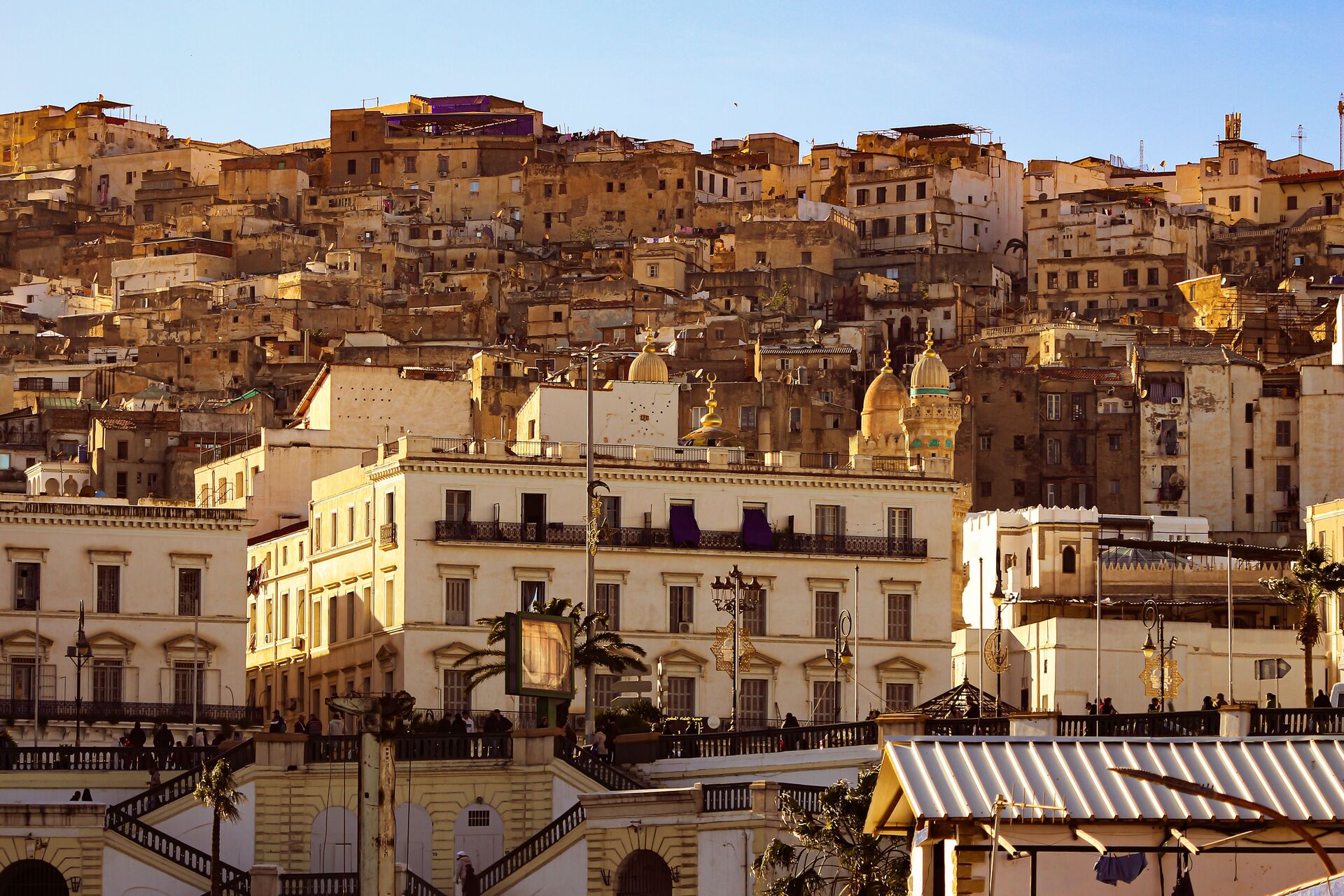
Independence Day: 5 July 1962. A war that killed somewhere between four hundred thousand and a million and a half people, and a country that is still arguing with France about the number.
France invaded Algeria in 1830 and stayed for a hundred and thirty-two years.
Algeria was not administered as a colony. From 1848 the northern territory was divided into départements — legally part of France itself, like Normandy or Provence. That is the single most important fact about this war, and it is why it was fought so savagely on both sides. France was not defending an overseas possession. It believed it was defending its own soil.
Underneath the legal fiction, the reality was straightforward. Land was expropriated on a vast scale and transferred to European settlers. Religious endowments were seized. Arabic was demoted in favour of French. And the population was divided into two legal categories.
European settlers — French, Spanish, Italian, Maltese in origin, collectively the pieds-noirs — were full citizens. Algerian Muslims were French subjects but not citizens. They could become citizens by formally renouncing their personal status under Islamic law, which most understood as being asked to renounce their religion. Very few did.
By the 1950s roughly a million Europeans and nine million Algerian Muslims lived in the same territory under two different sets of rights, with the land, the towns, the schools and the vote concentrated in the hands of the smaller group.
Europe celebrated the defeat of Nazi Germany. In Sétif, in the north-east, thousands of Algerians joined the VE Day march carrying nationalist banners and, for the first time in public, the Algerian flag.
A young Muslim scout named Saal Bouzid was shot dead for holding it.
The crowd turned on European settlers, and around a hundred were killed in Sétif, Guelma, Kherrata and the surrounding countryside.
What followed was not policing. The French army, the Foreign Legion, gendarmes, naval bombardment and armed settler militias carried out reprisals across the region for the better part of two months. Villages were bombed from the air. Bodies were thrown into ravines at Kherrata and burned in lime kilns at Guelma.
The death toll is one of the most bitterly disputed figures in modern history. French authorities in 1945 stated 1,020 to 1,500 Algerians killed. Independent Algeria adopted the nationalist estimate of 45,000. Historians today generally place it between 3,000 and 30,000, with many settling around 15,000 to 20,000.
Nobody disputes what it did. Before May 1945, Algerian nationalism was dominated by moderates like Ferhat Abbas who still believed Algeria could evolve inside a French framework. After Sétif, the moderates were finished and the argument for armed struggle won. Nearly every commander of the war that began in 1954 was radicalised by 1945.
This happened in peacetime. There was no war in Algeria in May 1945. The dead were civilians, killed on the day Europe declared peace.
The current version of this page said resistance "begins with quiet moments." It began at Sétif, with rifle fire into a crowd.
The war has a date, and it is not 1954 in general. It is 1 November 1954 — All Saints' Day, remembered in Algeria as Toussaint Rouge, the Red All Saints.
Around thirty coordinated attacks were launched across Algeria that night by a new organisation calling itself the Front de Libération Nationale. Militarily the attacks achieved almost nothing; the FLN had a few hundred fighters and barely any weapons.
Politically they changed everything, because the FLN issued a proclamation with a single demand — the restoration of a sovereign Algerian state — and it did not offer to negotiate about reform.
The French Interior Minister at the time was François Mitterrand. His response was that the only possible negotiation was war. Algeria, he said, was France.
The current page describes the FLN as "not a traditional army" but a network of teachers, farmers and women carrying messages, and says the struggle was "not a war between two militaries."
Half of that is true and the omission matters.
The FLN did have an army — the Armée de Libération Nationale, organised into six military districts called wilayas, with ranks, discipline and courts. It also had a mass civilian network, and Algerian women played a central and frequently armed role, including in the bombings of the Battle of Algiers.
And the FLN fought other Algerians.
Messali Hadj was the founding father of Algerian nationalism, the man whose movement had produced most of the FLN's leaders. His rival organisation, the MNA, refused to submit to FLN authority. The two fought a war within the war, in Algeria and among Algerian workers in France, in what became known as the Café Wars. Official French figures record around 4,000 dead in France alone, and other estimates run to 5,000.
Inside Algeria, the FLN destroyed the MNA. In May 1957 at Melouza, an FLN unit killed roughly three hundred villagers in a settlement it regarded as MNA-aligned.
The FLN also carried out internal purges of its own fighters — the figure most often cited is around twelve thousand killed by their own side.
None of this makes the French colonial system defensible. It does mean that the sentence "unity in purpose" does not describe the Algerian revolution, and Algerians who lived through it know that it does not.
In 1957 the French government handed civil authority in the capital to the army, which was ordered to destroy the FLN network in the city.
It succeeded. The Battle of Algiers broke the FLN's urban organisation, and it did so through mass arrest, systematic torture and disappearance. Electricity, water, beatings and suspension were used as standard interrogation practice. Thousands of Algerians were taken and never seen again.
This is not an allegation from the losing side. It was documented at the time, it prompted resignations inside the French administration, and it was later described in detail in the memoirs of senior French officers who had ordered it and who declined to express regret.
Torture was also used against Europeans who supported independence. Maurice Audin, a young mathematics lecturer and communist, was arrested in Algiers in June 1957 and never seen again. In 2018, fifty-six years after independence, a French president formally acknowledged that Audin had died under torture in a system the French state had established.
On 17 October 1961 the FLN called a peaceful demonstration in Paris against a curfew imposed on Algerians. Around thirty thousand people marched.
The Paris police, under prefect Maurice Papon, attacked the march. Demonstrators were beaten, and an unknown number were thrown into the Seine and drowned. Bodies were recovered from the river for days.
The French state acknowledged forty deaths — in 1998, after thirty-seven years of denial. Historians estimate between two and three hundred.
This happened in the capital of France, against people who were legally French subjects, and it was successfully concealed for more than a generation.
Not because it was defeated in the field.
By 1960 the French army had largely won the military war. The FLN's internal forces had been isolated behind fortified border lines, the urban networks were broken, and around 470,000 French troops were deployed.
France left for other reasons, and they are worth listing plainly. The war was ruinously expensive. Conscription made it a war fought by ordinary French families. The torture revelations were corroding France's standing and its self-image. International pressure was mounting. And Charles de Gaulle, brought back to power in 1958 by settlers and officers who expected him to keep Algeria French, concluded that it could not be held.
De Gaulle's shift produced a revolt inside France's own institutions. In April 1961 four generals attempted a coup in Algiers. It collapsed within days.
Out of its wreckage came the OAS — the Organisation Armée Secrète, a settler and military terrorist organisation which spent 1961 and 1962 bombing and assassinating in Algeria and in France, attempting to kill de Gaulle himself, and finally conducting a scorched-earth campaign against the country it claimed to be saving: burning the university library of Algiers, destroying schools, hospitals and oil installations so that independent Algeria would inherit ashes.
Some of the worst destruction in Algeria was done in the final months, by Europeans, to prevent Algerians having it.
The Evian Accords were signed on 18 March 1962, and a ceasefire took effect the next day.
The current version of this page says that at these talks, "for the first time since 1830, Algerians sat at the table as equals."
They did not. Evian was negotiated between a state and an insurgency after eight years of war. The FLN delegation was housed under guard on the French side of the border and shuttled to the sessions. France retained its Saharan nuclear test sites and the Mers el-Kébir naval base under the terms.
It was a settlement between unequal parties, which is what most decolonisations were. Saying otherwise is not generosity to the Algerians who negotiated it. It obscures how hard they had to fight for what they got.
A French referendum approved the accords in April. An Algerian referendum on 1 July 1962 returned an overwhelming vote for independence. France recognised it on 3 July.
Algeria took 5 July 1962 as its independence day — the anniversary, to the day, of the French landing in 1830. That choice was deliberate. A hundred and thirty-two years, closed on the same date.
Millions did fill the streets, and the joy was real.
Something else happened too. In Oran on 5 July, as FLN forces entered the city, shooting broke out and a massacre of European civilians followed over three days. Estimates range from around ninety-five to more than three hundred and fifty dead.
And two groups of people were being destroyed while the crowds celebrated.
Around a million Europeans lived in Algeria. Many were third- or fourth-generation, born there, with no other home. Many had been poor. Some had supported independence. Most had not.
After the OAS campaign and the killings, they were given a choice that had become a slogan: la valise ou le cercueil — the suitcase or the coffin.
Roughly eight hundred thousand to nine hundred thousand left in 1962, most within a few months, most to a France that did not particularly want them. Algeria's Jewish community, which had lived there for two thousand years and had been granted French citizenship in 1870, went with them almost in its entirety.
This is the omission that matters most, and it is missing from the French national story and the Algerian one alike.
Several hundred thousand Algerian Muslims served France during the war — as regular soldiers, as auxiliaries, as village self-defence militia. The auxiliaries are collectively remembered as the harkis. At the time of Evian there were on the order of a quarter of a million Algerian Muslims engaged on the French side in some capacity.
The Evian Accords guaranteed their safety.
Instead, French orders were given to disarm them and to prevent their evacuation to France. Officers who disobeyed and brought their men out did so against instructions.
What followed was mass killing. Revolutionary tribunals, lynchings, torture, and murder — carried out partly by the ALN and heavily by the marsiens, Algerians who joined the winning side in March 1962 once the fighting was over and who had reputations to establish.
The numbers are, again, disputed. A French official figure records around 4,400 killed or missing. Most historians accept something in the region of seventy thousand harkis and family members killed. Some estimates go to a hundred and fifty thousand.
France eventually admitted around forty thousand, and housed them for years in camps.
For half a century, neither country would discuss them. France had abandoned men who had fought for it. Algeria had killed tens of thousands of its own people without trial. Both preferred silence. France passed a law in 1968 amnestying all acts committed during the Algerian War — torture, extrajudicial killing, everything — which closed the question in French courts for good.
This page will not print a single figure, because there isn't one.
Algerian dead: the Algerian state's official figure is one and a half million martyrs, and the phrase is part of the national identity. French and most Western historians estimate between 250,000 and 400,000. Some independent estimates run higher. The gap is enormous, it is political on both sides, and it has never been closed.
French soldiers killed: around 25,000, most of them conscripts.
European civilians killed: around 6,000.
Killed by the FLN in internal purges: around 12,000.
Killed in the FLN–MNA conflict in France: around 4,000 to 5,000 by official French count.
Harkis and families killed after independence: disputed, commonly estimated around 70,000.
Displaced during the war: more than two million Algerians were forcibly moved into resettlement camps by the French army — roughly a quarter of the rural population.
There is a part of this story that did not end in 1962.
France exploded its first nuclear device at Reggane in the Algerian Sahara on 13 February 1960, while the war was being fought. Three more atmospheric tests followed, then thirteen underground tests at In Ekker.
Under the Evian Accords, France retained the right to continue testing on Algerian soil after independence. The last test was in 1966; the sites were not fully handed back until 1967.
In May 1962 an underground test at In Ekker vented, contaminating personnel and the surrounding area.
Contaminated equipment and material were buried in the desert. The precise locations were not disclosed for decades. Compensation and clean-up remain live disputes between the two governments, and Algerian veterans and residents have never been comprehensively surveyed for the health consequences.
Freedom is not a finish line, as the current page says. It is worth being specific about what came next, because the existing timeline reduces sixty years to "industrial development" and "political crisis."
Ahmed Ben Bella became Algeria's first president in September 1963. On 19 June 1965 he was overthrown in a coup by his defence minister, Houari Boumédiène, and imprisoned for fifteen years. Algeria became a one-party state under the FLN, with the army as the real power behind it — an arrangement that has never fundamentally changed.
Boumédiène nationalised the hydrocarbons and pursued state-led industrialisation. He died in 1978. Chadli Bendjedid succeeded him. In October 1988, riots over shortages and unemployment were put down with hundreds killed, and the shock forced the introduction of multi-party politics in 1989.
In December 1991, Algeria held its first free legislative elections. The Islamic Salvation Front won the first round decisively, taking 188 of 430 seats and needing only a handful more for a majority.
On 11 January 1992 the army cancelled the second round, forced the president to resign, banned the FIS and jailed tens of thousands of its members.
What followed is known in Algeria as the Black Decade. A war between the state and Islamist armed groups that ran to 2002, involving village massacres, civilian throat-cuttings, state death squads and mass disappearances. The commonly cited death toll is 150,000 to 200,000. Thousands more were forcibly disappeared and have never been accounted for; a 2005 charter offered compensation and amnesty and effectively criminalised further public questioning.
Abdelaziz Bouteflika presided from 1999 to 2019, when the Hirak — enormous, sustained, peaceful weekly protests — forced him to abandon a fifth term. Abdelmadjid Tebboune was elected later that year and re-elected in 2024. Many Hirak activists have since been prosecuted.
Relations with France remain unresolved. Memory laws, apology demands, the archives, the nuclear sites and the harkis are all still active disputes, sixty-four years on. In May 2025 both countries marked the eightieth anniversary of Sétif, and French parliamentarians travelled to Algiers to press their own president to speak about it. He has not.
There is a version of this story in which a united people rose, defeated an empire, and were free. It is inspiring, it is on most of the internet, and Algerians do not tell it to each other that way.
What actually happened is harder and worth more.
A people classified as subjects in their own country for over a century were fired on while celebrating the defeat of fascism, waited nine years, and then fought one of the most brutal wars of the twentieth century — against an army that tortured as policy, and among themselves, at a cost neither side can agree on. They won, in the sense that France left. And then the men who had won it took the state, kept it, cancelled an election thirty years later, and fought another war that killed as many people as the last decade of the first one.
Algeria's independence was earned at a price almost no other African country paid, and it inspired liberation movements from Angola to Palestine — that part of the existing page is entirely true, and Algiers became the capital of revolutionary movements worldwide in the 1960s and 1970s for exactly that reason.
But independence did not deliver what was promised, and Algerians have been saying so in the streets, at enormous personal risk, from 1988 to 2019 and since.
Honouring the dead of 1945 and 1954 to 1962 means telling their story completely — including the harkis they killed, the settlers who fled, the Algerians the FLN executed, and the election the army cancelled in 1992.
Anything less is a monument, not a history.
Published: 5 July 2024 · Fully revised and fact-checked: 7 September 2026.
How this page was checked. Dates, casualty ranges and the sequence of events were verified against the sources listed above and against published scholarship on the Algerian War. The dates of the French invasion of 1830, the massacres beginning 8 May 1945, the launch of the war on 1 November 1954, the Battle of Algiers in 1957, the first French nuclear test at Reggane on 13 February 1960, the Paris demonstration of 17 October 1961, the generals' putsch of April 1961, the Evian Accords of 18 March 1962, the referendum of 1 July and independence on 5 July 1962, the coup against Ahmed Ben Bella on 19 June 1965, the cancellation of the elections on 11 January 1992 and the Hirak of 2019 are as recorded. Casualty figures are given as ranges because they are genuinely disputed: the Algerian state's figure for the war dead is 1.5 million while French and most Western historians estimate 250,000–400,000; estimates for Sétif and Guelma range from around 1,500 to 45,000; estimates for harkis killed after independence range from official French figures of around 4,400 to historians' figures of 70,000 and above. This page states the disagreement rather than resolving it. Violence by the FLN against other Algerians, and killings of European and harki civilians in 1962, are included because an account that omits them is incomplete, not because they mitigate the colonial system that produced the war. This page makes no allegation against any living person.
Written and researched by Remo Kurka · africanindependence.com
We strive to unify diverse narratives from across Africa, showcasing the continent's shared heritage and unique stories.
Our mission is to honor and preserve the history of African cultures and independence movements for future generations.
We provide a platform for innovative exchange of ideas, resources, and insights, understanding that knowledge should be accessible to all.