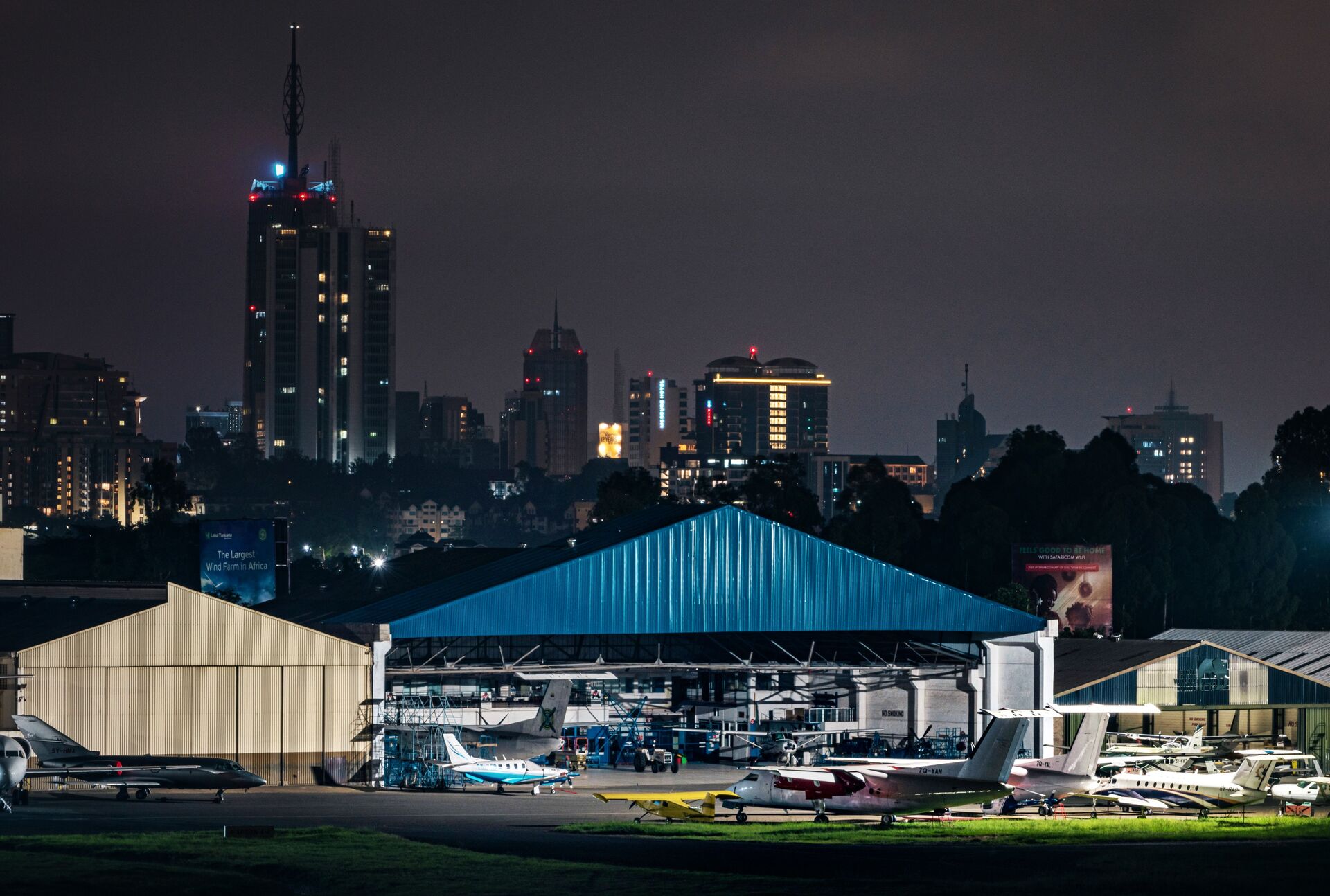
Photo: Airport in Nairobi. East Africa preserves some of humanity's oldest archaeological discoveries, ancient kingdoms, historic trading cities and living cultures that continue to shape the continent.
"East Africa is where humanity remembers its beginnings. From ancient fossils and forgotten kingdoms to ocean cities and living traditions, every landscape carries a story."
East Africa occupies a unique position in world history.
It is the region where some of the earliest evidence of human ancestors has been discovered, where ancient kingdoms built monumental churches and cities, where merchants connected Africa with Arabia, Persia, India and beyond, and where diverse cultures developed along mountains, lakes, savannahs and coastlines.
From the highlands of Ethiopia to the islands of the Indian Ocean, East Africa has always been a place of movement and exchange.
Trade routes crossed the region for thousands of years.
Ideas, languages, religions and artistic traditions travelled between communities.
Today, museums and heritage sites across East Africa preserve this extraordinary journey.
Photo: Airport in Nairobi. East Africa preserves some of humanity's oldest archaeological discoveries, ancient kingdoms, historic trading cities and living cultures that continue to shape the continent.
East Africa's museums tell stories stretching back millions of years.
They preserve:
But heritage in East Africa is not only found in museums.
It lives in:
Few countries in Africa possess a historical identity as distinctive as Ethiopia.
One of the world's oldest continuously existing civilisations, Ethiopia developed powerful kingdoms, its own written language, unique architecture and a remarkable religious heritage.
Unlike most African countries, Ethiopia maintained its independence during the European colonial period, making it a symbol of African sovereignty and resilience.
Located in Addis Ababa, the National Museum of Ethiopia is one of Africa's most important museums.
Its most famous resident is Lucy, the fossilised remains of Australopithecus afarensis, discovered in the Afar region in 1974.
Dating back approximately 3.2 million years, Lucy transformed scientific understanding of human evolution.
The museum also houses:
For many visitors, this is not simply a museum.
It is a journey through the story of humanity itself.
The rock-hewn churches of Lalibela are among Africa's greatest architectural achievements.
Carved directly into volcanic stone during the medieval period, these churches remain active places of worship more than 800 years after their creation.
The complex reflects the strength of Ethiopian Christianity and the extraordinary engineering skills of its builders.
Today, pilgrims and visitors from around the world travel to Lalibela to experience this unique heritage.
The ancient city of Aksum was once the centre of one of Africa's greatest kingdoms.
Between the first and seventh centuries, the Kingdom of Aksum controlled important trade routes connecting Africa with Arabia and the wider world.
Its famous achievements include:
Aksum's history demonstrates that complex African civilisations flourished long before modern borders existed.
Known as the "Camelot of Africa," Gondar served as Ethiopia's imperial capital for centuries.
The Royal Enclosure contains castles, palaces and churches reflecting Ethiopia's unique architectural traditions.
The city remains an important centre of Ethiopian history and culture.
Beyond monuments and museums, Ethiopia's greatest heritage may be its people.
The country has more than 80 languages and extraordinary cultural diversity.
Traditional coffee ceremonies, music, religious festivals and craftsmanship continue to form an essential part of daily life.
Coffee itself—deeply connected with Ethiopian origins—has become one of the world's most important cultural exports.
Kenya is internationally famous for wildlife, but its cultural and historical importance is equally remarkable.
The country lies within the Great Rift Valley, one of the most important regions on Earth for understanding human evolution.
It is also home to diverse communities, ancient coastal cities and rich artistic traditions.
The National Museums of Kenya network represents one of East Africa's strongest cultural institutions.
Its main museum in Nairobi presents collections covering:
The institution also manages important heritage sites across the country.
Sites such as Koobi Fora near Lake Turkana have produced some of the world's most significant fossil discoveries.
These findings have helped scientists understand the development of early humans and their ancestors.
The Turkana region remains one of the most important archaeological landscapes on Earth.
Built by the Portuguese in the sixteenth century, Fort Jesus reflects the struggle for control of the Indian Ocean trade routes.
Today, it stands as one of Kenya's most important historic monuments.
Its museum explores:
Lamu is one of the best-preserved Swahili settlements in East Africa.
For centuries, it served as a centre of trade connecting Africa with Arabia and Asia.
Its narrow streets, traditional houses, mosques and waterfront architecture preserve the unique Swahili civilisation that developed along the Indian Ocean coast.
From Ethiopia's ancient kingdoms to Kenya's archaeological treasures, the first chapter of East Africa already reveals an extraordinary truth:
This region is not only a destination.
It is a record of humanity itself.
In the next part, we continue through:
🇹🇿 Tanzania — Zanzibar, Kilwa and the legacy of Swahili civilisation
🇺🇬 Uganda — the Kingdoms of Buganda, Kasubi Tombs and cultural heritage
🇷🇼 Rwanda — royal traditions, museums and memory after tragedy
🇧🇮 Burundi — royal heritage and the drums of Gishora
🇸🇩 Sudan — Nubian kingdoms, pyramids and ancient civilisations
Tanzania possesses one of the richest heritage landscapes in Africa.
From the earliest evidence of human origins near Olduvai Gorge to the ancient Swahili trading cities of the coast and the royal traditions of the Great Lakes region, Tanzania's history stretches across thousands of years.
The country is also home to Zanzibar, an island whose history connects Africa with Arabia, Persia, India and Europe.
Located in Dar es Salaam, the National Museum of Tanzania is one of the country's most important cultural institutions.
Its collections introduce visitors to Tanzania's archaeological discoveries, natural history, traditional cultures and political development.
Among its most significant themes are:
The museum forms part of a wider network that includes several important heritage locations throughout the country.
Few archaeological sites in the world are as important as Olduvai Gorge.
Located in northern Tanzania, this remarkable landscape has produced some of the earliest evidence of human ancestors and their activities.
Discoveries made here by archaeologists including the Louis Leakey family transformed our understanding of human evolution.
Stone tools, fossils and ancient footprints demonstrate that this region has played a central role in the human story.
For visitors, Olduvai is not simply an archaeological site.
It is a place where humanity can look back millions of years into its own origins.
Zanzibar is one of Africa's most famous historic destinations.
For centuries, the islands were at the centre of Indian Ocean trade networks connecting East Africa with Arabia, Persia, India and beyond.
The result is a unique cultural identity combining African, Arab, Persian, Indian and European influences.
The historic centre of Zanzibar City, known as Stone Town, is a UNESCO World Heritage Site.
Its narrow streets, carved wooden doors, historic houses, mosques and colonial buildings preserve centuries of cultural exchange.
Visitors encounter:
Stone Town is not a frozen monument.
It remains a living city where people continue to work, trade and celebrate traditions that have developed over generations.
Important museums include:
Originally built as a ceremonial palace for the Sultan of Zanzibar, the House of Wonders became one of the island's most recognisable landmarks.
It reflects the history of the Zanzibar Sultanate and the island's connections with the wider Indian Ocean world.
The former Sultan's Palace provides insight into royal life, diplomacy and the history of the Zanzibar Sultanate.
Zanzibar also preserves important sites connected to the history of the East African slave trade.
The Anglican Cathedral in Stone Town stands on the former site of a major slave market and serves as a place of remembrance and reflection.
Along Tanzania's southern coast lies Kilwa Kisiwani, one of Africa's most important medieval trading cities.
From approximately the tenth century onwards, Kilwa became a powerful Swahili city-state controlling trade routes across the Indian Ocean.
Gold, ivory, ceramics and textiles moved through its harbour.
The ruins of palaces, mosques and houses reveal a sophisticated urban society deeply connected with the wider world.
Today, Kilwa Kisiwani stands as one of Africa's most important archaeological heritage sites.
Uganda's heritage is shaped by powerful traditional kingdoms, the Great Lakes environment and extraordinary cultural diversity.
Long before modern borders were created, organised states developed throughout the region.
Among them, the Kingdom of Buganda became one of East Africa's most influential traditional institutions.
Established in Kampala, the Uganda Museum is the country's oldest and largest museum.
Its collections include:
The museum provides visitors with an introduction to Uganda's many communities and cultural traditions.
The Kasubi Tombs are among Uganda's most important heritage sites.
Located in Kampala, they are the burial place of several Kabakas (kings) of Buganda.
The traditional architecture, constructed with organic materials, represents remarkable indigenous building knowledge.
The site is not only a monument.
It remains an important spiritual and cultural centre for the Baganda people.
The Kingdom of Buganda is one of Africa's oldest continuing traditional monarchies.
Although Uganda today is a republic, the kingdom remains an important cultural institution.
Its traditions, ceremonies, language and historical identity continue to influence millions of people.
This is an important reminder that many African kingdoms did not disappear with the creation of modern states.
They adapted and continue as cultural institutions within contemporary nations.
Rwanda's heritage story is both ancient and modern.
The country possesses a long history of kingdoms, royal traditions, artistic achievements and cultural practices.
At the same time, Rwanda's recent history has been profoundly shaped by the 1994 genocide against the Tutsi.
Today, museums and memorial sites play a central role in remembrance, education and reconciliation.
The Rwanda Cultural Heritage Academy works to preserve and promote the country's historical and cultural resources.
Its work includes:
Located in Nyanza, the King's Palace Museum introduces visitors to Rwanda's royal history.
The reconstructed traditional palace provides insight into the life of the Rwandan monarchy before the modern republic.
Visitors can learn about royal ceremonies, traditional architecture and the role of the king in historical Rwandan society.
The Kigali Genocide Memorial is one of Rwanda's most significant places of remembrance.
It documents the history of the 1994 genocide against the Tutsi, honours victims and provides education about the consequences of hatred and division.
It is a place that requires respectful reflection.
Understanding Rwanda today requires understanding both its ancient heritage and its modern journey of recovery.
Burundi is a small country with a remarkably rich cultural heritage.
Its history is closely connected with the traditions of the Burundian monarchy, which existed for centuries before the colonial period.
Located in Gitega, the country's cultural capital, the National Museum preserves collections relating to Burundi's history and traditions.
Exhibits include:
The famous royal drums of Burundi are among the country's strongest cultural symbols.
Traditionally connected with the monarchy, drumming ceremonies represented national identity, celebration and important social events.
The Gishora Drum Sanctuary preserves this tradition and allows visitors to experience one of East Africa's most powerful musical heritages.
From Zanzibar's ocean routes to Buganda's royal courts and Burundi's sacred drums, this part of East Africa reveals a common theme:
Heritage is not only about buildings.
It is about memory.
It is about identity.
It is about the traditions communities choose to carry forward.
To be continued in: Museums and Heritage Across East Africa – Part 3
Next:
Sudan possesses one of the richest archaeological heritages on Earth.
Often overshadowed internationally by the better-known monuments of Egypt, Sudan preserves the remains of powerful African kingdoms that flourished along the Nile for thousands of years.
Ancient Nubia was not a peripheral region.
It was a centre of civilisation, trade and political power.
Located in Khartoum, the Sudan National Museum houses one of Africa's most important archaeological collections.
Its exhibitions cover thousands of years of history, including:
Among its treasures are ancient statues, royal objects, pottery and wall paintings rescued from archaeological sites threatened by modern development.
The Kingdom of Kush remains one of Africa's greatest ancient civilisations.
From its capitals at Napata and Meroë, Kush controlled important territories along the Nile and developed its own political, religious and artistic traditions.
The Kushite kings even ruled Egypt during the Twenty-Fifth Dynasty, demonstrating the powerful role of Nubian civilisation in ancient history.
The pyramids of Meroë are among Sudan's most recognisable heritage sites.
Built as royal burial monuments, they differ from the pyramids of Egypt through their smaller size and distinctive steep shape.
More than 200 pyramids remain in the region, forming one of Africa's most remarkable archaeological landscapes.
The site reminds visitors that ancient African civilisations were diverse, sophisticated and deeply connected to the wider world.
Near the ancient city of Napata stands Jebel Barkal, a sacred mountain associated with Kushite kingship and religious traditions.
The surrounding temples and archaeological remains demonstrate the importance of this region as a political and spiritual centre.
Sudan's heritage extends beyond archaeology.
Its communities preserve rich traditions of:
The country demonstrates that African history did not begin with colonial borders.
It stretches back thousands of years.
South Sudan became the world's newest independent country in 2011, but its peoples possess cultural traditions reaching back generations.
The country is home to some of Africa's most distinctive communities, including the Dinka, Nuer, Shilluk, Bari and many others.
Located in Juba, the Dr John Garang Memorial is primarily associated with South Sudan's independence history.
It represents the modern political journey of the country and the struggle that led to independence.
Unlike countries with large collections of ancient stone monuments, South Sudan's heritage is primarily living.
It exists through:
Cattle hold enormous cultural significance among many communities, representing wealth, social connection and identity.
Years of conflict have damaged many heritage institutions, but communities continue to preserve their traditions.
For South Sudan, protecting heritage is closely connected with protecting identity and building national unity.
Eritrea occupies one of Africa's most strategic locations.
Its coastline along the Red Sea has connected Africa with Arabia, Asia and the wider world for thousands of years.
The country's heritage reflects ancient kingdoms, maritime trade, Islamic influence and Italian colonial history.
Located in Asmara, the National Museum introduces visitors to Eritrea's archaeological and cultural heritage.
Its collections include:
The museum plays an important role in documenting the country's long and complex history.
Asmara is one of Africa's most unique urban heritage sites.
Its Italian colonial architecture from the early twentieth century includes remarkable examples of Art Deco design.
Recognised as a UNESCO World Heritage Site, Asmara preserves cinemas, churches, villas and public buildings that create one of the continent's most distinctive city landscapes.
The ancient port city of Adulis was one of the most important trading centres on the Red Sea.
Connected with the Kingdom of Aksum, it linked Africa with Arabia, India and the Mediterranean world.
Archaeological remains reveal a city that played an important role in international commerce more than a thousand years ago.
Djibouti is a small country with a strategically important location between Africa and Arabia.
Its heritage reflects ancient trade routes, nomadic cultures and the dramatic landscapes of the Horn of Africa.
The National Museum in Djibouti City introduces visitors to the country's archaeological and cultural heritage.
Collections highlight:
Although not a museum, Lake Assal represents one of Djibouti's most extraordinary natural heritage sites.
The surrounding landscape reflects the geological forces that have shaped the Horn of Africa for millions of years.
The Afar people have lived across this region for centuries, maintaining traditions adapted to one of the world's harshest environments.
Nomadic knowledge, camel culture and desert survival skills remain important parts of the region's identity.
Somalia possesses one of Africa's oldest maritime traditions.
Its long coastline connected African communities with Arabia, Persia and India through centuries of Indian Ocean trade.
Despite recent challenges, Somalia's heritage remains exceptionally rich.
Located in Mogadishu, the National Museum preserves archaeological and historical collections documenting Somali culture and history.
The institution has experienced difficulties due to decades of conflict, but restoration efforts continue to rebuild cultural infrastructure.
The ancient port city of Zeila was once an important centre of Islamic scholarship and trade.
Its history reflects centuries of connections between the Horn of Africa and the wider Indian Ocean world.
One of Somalia's greatest archaeological treasures is Laas Geel.
Located near Hargeisa, the site contains exceptionally preserved prehistoric rock paintings depicting humans, animals and ancient ceremonial scenes.
These paintings provide evidence of thousands of years of human activity in the region.
The Seychelles offers a different kind of African heritage.
Its identity has been shaped by African, European, Indian and Asian influences creating a distinctive Creole culture.
Located in Victoria, Mahé, the museum explores the cultural development of the islands.
Collections include:
Located in the mountains above Victoria, Mission Lodge reflects the colonial history of Seychelles and its connections with education, plantation society and social change.
Music, cuisine, language and festivals form the heart of Seychellois identity.
The islands demonstrate how African heritage can evolve through centuries of cultural exchange.
The Comoros archipelago lies between Madagascar and the African mainland.
Its heritage reflects African, Arab, Persian and Indian Ocean influences.
Located in Moroni, the National Museum introduces visitors to the islands' history, traditions and natural environment.
Collections include:
The old town of Moroni preserves traditional Swahili-Islamic architecture.
Narrow streets, historic mosques and coastal trading traditions reflect centuries of connections across the Indian Ocean.
From the pyramids of Kush to the islands of the Indian Ocean, East Africa demonstrates the extraordinary diversity of African history.
It is a region where:
The museums and heritage sites of East Africa do more than protect the past.
They explain the present.
East Africa is a place where every landscape carries memory.
The Great Rift Valley tells the story of humanity's beginnings.
Ancient Ethiopian churches preserve centuries of faith and architecture.
Swahili cities reveal Africa's connections with the wider world.
Royal kingdoms demonstrate the sophistication of African political traditions.
Island cultures show how Africa has always been connected across oceans.
To explore East Africa is to discover that history is not something distant.
It surrounds you.
It lives in ancient stones, royal ceremonies, music, languages and the daily traditions of millions of people.
The greatest heritage of East Africa is not only what has survived.
It is what continues.
Part of the African Independence Knowledge Series — helping visitors discover, understand and explore Africa through its history, heritage, cultures and peoples.
Continue your journey with:
We strive to unify diverse narratives from across Africa, showcasing the continent's shared heritage and unique stories.
Our mission is to honor and preserve the history of African cultures and independence movements for future generations.
We provide a platform for innovative exchange of ideas, resources, and insights, understanding that knowledge should be accessible to all.