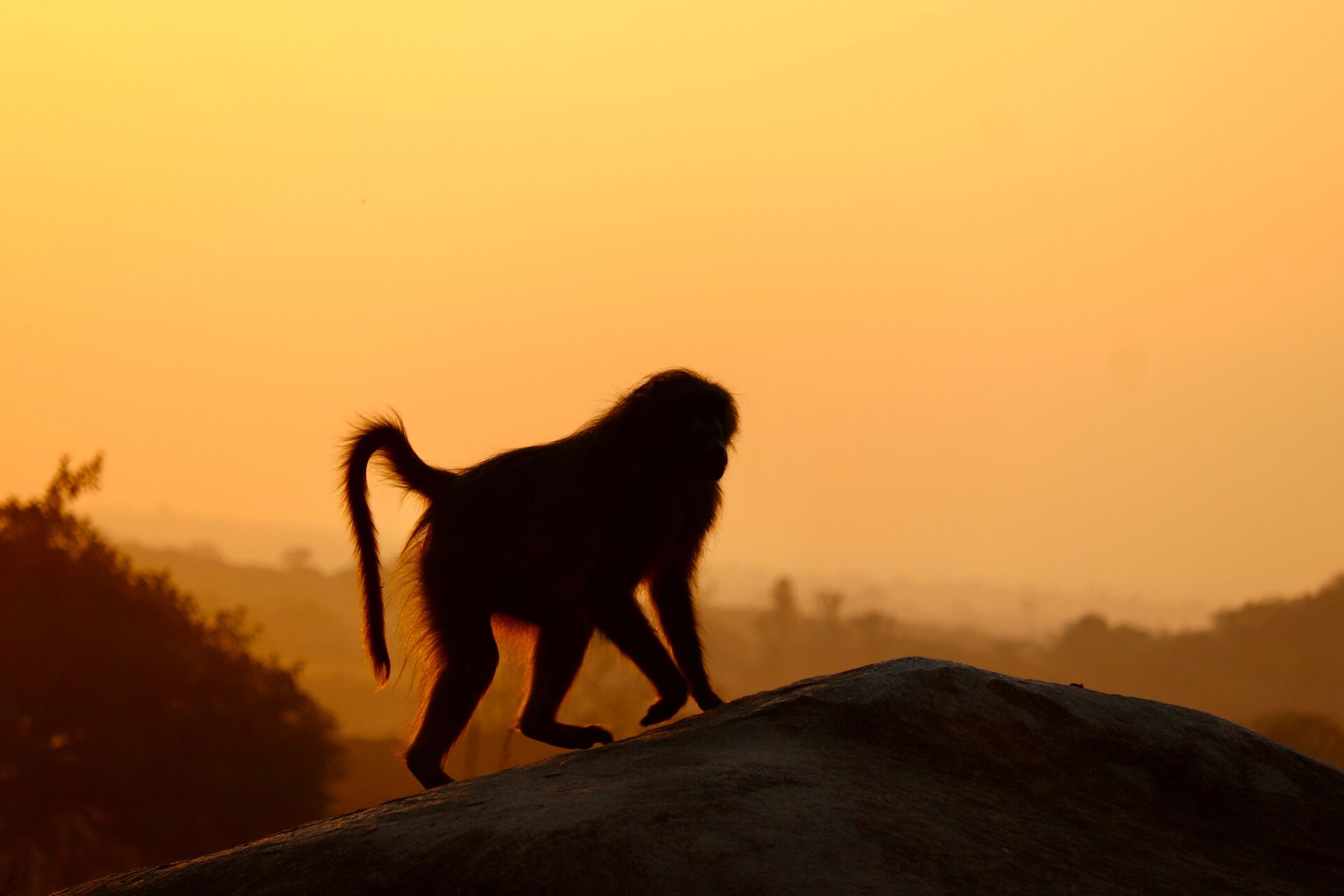
Photo: Baboon with an amazing sunset background. Zimbabwe
Southern Africa stretches from the Atlantic Ocean to the Indian Ocean, from the deserts of Namibia to the forests and mountains of Mozambique and Madagascar.
It is a region of extraordinary geographical variety.
The Kalahari Desert, the Drakensberg Mountains, the Zambezi Valley and the Indian Ocean coastline have shaped the lives of communities for thousands of years.
The archaeological record here is among the richest on Earth.
Some of the earliest evidence of human creativity has been discovered in this region, including ancient tools, settlements and rock paintings.
Yet Southern Africa's heritage is not only ancient.
It is also modern.
Museums preserve stories of kingdoms, migration, colonialism, resistance, independence and the continuing development of African societies.
This region of Africa is fascinating because its heritage combines some of the oldest human traces on Earth, ancient stone cities, powerful kingdoms, indigenous knowledge systems, colonial encounters, liberation struggles and some of Africa's most internationally recognised museums.
Southern Africa is often presented through wildlife, landscapes and adventure tourism.
But behind the savannahs, mountains and coastlines lies a deeply layered human story.
This is the region of:
Photo: Baboon with an amazing sunset background. Zimbabwe
Although Angola is geographically often considered part of Central Africa, its southern regions connect strongly with the heritage landscape of Southern Africa.
Its cultural traditions, liberation history and archaeological heritage make it an important part of the wider regional story.
As discussed in the Central Africa chapter, the National Museum of Anthropology in Luanda preserves one of Angola's finest cultural collections.
Its exhibitions represent the country's many communities, including the Ovimbundu, Mbundu, Bakongo and Chokwe.
Traditional masks, sculptures, musical instruments and ceremonial objects demonstrate the extraordinary artistic traditions of Angola.
One of Angola's most remarkable heritage sites is Tchitundo-Hulu in the Namibe Province.
The area contains thousands of prehistoric rock paintings and engravings created by ancient communities.
These works provide evidence of human creativity and spiritual expression stretching back thousands of years.
Angola's modern history is strongly connected with the wider African liberation movement.
Museums and monuments across the country preserve memories of the struggle for independence from Portuguese colonial rule and the difficult years that followed.
Botswana is internationally famous for its wildlife, especially the Okavango Delta and Chobe National Park.
However, its cultural heritage is equally significant.
The country preserves some of Southern Africa's strongest connections to ancient hunter-gatherer traditions.
Located in Gaborone, the Botswana National Museum is one of the country's most important cultural institutions.
Its collections include:
The museum introduces visitors to Botswana's many communities, including the Tswana peoples and San communities.
The San peoples represent one of the oldest continuous cultural traditions in Southern Africa.
Their knowledge of the environment, storytelling traditions and artistic heritage provide extraordinary insight into ancient human relationships with nature.
Rock paintings found throughout southern Africa depict:
These artworks are not simply decoration.
They represent complex systems of knowledge, belief and communication.
Located in north-western Botswana, Tsodilo Hills is one of Africa's most important archaeological landscapes.
Recognised as a UNESCO World Heritage Site, the hills contain thousands of rock paintings created over many centuries.
For local communities, especially the San and Hambukushu peoples, Tsodilo remains a spiritually important place.
It demonstrates how landscapes can become living cultural archives.
Eswatini, formerly known as Swaziland, is one of Africa's remaining monarchies.
Its heritage is deeply connected with royal traditions, ceremonies and community identity.
Located near Lobamba, the National Museum introduces visitors to the country's history and culture.
Collections include:
The Mantenga Cultural Village provides insight into traditional Swazi architecture, music, dance and daily life.
Visitors can experience performances and learn about customs that remain important within modern Eswatini.
One of Eswatini's most significant cultural events is the Incwala ceremony.
Connected with kingship, renewal and national identity, it demonstrates the continuing importance of traditional institutions.
The ceremony is a reminder that African kingdoms did not simply disappear with modern states.
Many continue as cultural institutions shaping identity today.
Lesotho is unique among African nations.
Entirely surrounded by South Africa, it is one of the world's few countries located entirely above 1,000 metres elevation.
Its mountain landscapes have shaped a proud cultural identity.
Morija is one of Lesotho's most important historical centres.
The museum preserves:
It provides insight into the development of modern Lesotho and the traditions of the Basotho people.
Thaba-Bosiu is one of Lesotho's most important heritage sites.
This mountain plateau served as the stronghold of King Moshoeshoe I, founder of the Basotho nation.
During the nineteenth century, Moshoeshoe united different communities and created a political identity that continues today.
The site represents both national history and the resilience of the Basotho people.
The famous Basotho blanket, traditional architecture and horseback culture are internationally recognised symbols of Lesotho.
However, they are not simply tourist images.
They represent adaptation to mountain environments and a living cultural identity.
Malawi is often called "The Warm Heart of Africa" because of the friendliness and hospitality of its people.
Its heritage is shaped by Lake Malawi, migration, trade and diverse cultural traditions.
Located in Blantyre, the Malawi National Museum preserves collections related to:
The museum provides visitors with an introduction to Malawi's communities and cultural development.
Recognised as a UNESCO World Heritage Site, Chongoni contains one of the most important collections of rock art in Central and Southern Africa.
Created by farming communities and hunter-gatherers, the paintings reflect spiritual beliefs, social changes and relationships with the environment.
Lake Malawi has always been more than a natural wonder.
It has supported fishing communities, trade networks and cultural exchange for generations.
Traditional fishing techniques, boat building and lakeside communities remain important parts of Malawi's identity.
Continue: Museums and Heritage Across Southern Africa – Part 2
Next:
🇲🇿 Mozambique — Ilha de Moçambique, Swahili-Portuguese heritage and Indian Ocean culture
🇳🇦 Namibia — San heritage, rock art, colonial history and independence museums
🇿🇲 Zambia — Livingstone, David Livingstone heritage and ancient settlements
🇿🇼 Zimbabwe — Great Zimbabwe, Mapungubwe connections and one of Africa's greatest archaeological achievements
Then Part 3 will complete the region with:
🇿🇦 South Africa — the largest heritage chapter of all
🇲🇬 Madagascar — unique island civilisation and biodiversity heritage
Mozambique has one of the longest coastlines in Africa and a heritage shaped by centuries of contact between African societies and the wider Indian Ocean world.
Arab, Persian, Indian, Portuguese and African influences combined along the coast, creating a unique cultural landscape.
But Mozambique's heritage is not only coastal.
The country's interior preserves ancient settlements, traditional kingdoms and diverse cultural traditions.
Located in Maputo, the National Museum of Art is one of Mozambique's most important cultural institutions.
Its collections include:
The museum demonstrates the creativity of Mozambican artists and the continuing evolution of African artistic expression.
The Museum of Natural History in Maputo is one of the city's best-known landmarks.
Founded during the colonial period, it contains collections relating to:
Its famous elephant embryo collection is internationally recognised.
The museum also reflects the complicated history of colonial-era institutions and their transformation into spaces serving independent Mozambique.
The Island of Mozambique is one of Africa's most significant historical sites.
A UNESCO World Heritage Site, it was a major trading centre for centuries.
Before Portuguese arrival, the island was already part of Indian Ocean networks connecting East Africa with Arabia, Persia and India.
Later, it became an important centre of Portuguese influence.
Its architecture reflects this layered history:
Important sites include:
Mozambique's northern coastline shares cultural connections with the wider Swahili world.
Trading towns developed along the coast where merchants exchanged:
These connections remind visitors that Africa was deeply involved in global trade long before modern globalisation.
Mozambique's twentieth-century history was shaped by the struggle against Portuguese colonial rule.
The country gained independence in 1975 after the liberation movement led by FRELIMO.
Museums, monuments and archives preserve memories of:
Namibia combines some of Africa's most dramatic landscapes with extraordinary archaeological and cultural heritage.
From the ancient rock engravings of the desert to the traditions of the Himba, Herero, Nama and San peoples, Namibia's heritage reflects thousands of years of human adaptation.
Located in Windhoek, the National Museum preserves collections covering:
The museum introduces visitors to Namibia's diverse communities and historical journey.
Twyfelfontein is one of Africa's most important rock engraving sites.
Recognised as a UNESCO World Heritage Site, it contains thousands of engravings created by ancient hunter-gatherer communities.
The images depict:
They provide insight into ancient spiritual beliefs and relationships between people and the natural world.
The San peoples of Namibia preserve one of humanity's oldest cultural traditions.
Their knowledge of plants, animals, landscapes and survival strategies developed over thousands of years.
Their rock art remains among the most valuable records of ancient human creativity.
The Himba people of northern Namibia are internationally known for their distinctive cultural traditions, including traditional clothing, hairstyles and pastoral lifestyle.
The Herero people also maintain a strong cultural identity expressed through clothing, ceremonies and historical memory.
Their heritage demonstrates the diversity of Namibia's living cultures.
Located in Windhoek, the Independence Memorial Museum documents Namibia's struggle for independence from South African rule.
Its exhibitions cover:
The museum plays an important role in preserving the modern national story of Namibia.
Zambia's heritage is closely connected with the great rivers of southern Africa, ancient trade routes and diverse communities.
The country is also internationally associated with Victoria Falls, one of the world's greatest natural landmarks.
The Livingstone Museum is Zambia's largest and oldest museum.
Located in Livingstone, near Victoria Falls, it contains collections relating to:
The museum is named after David Livingstone, whose journeys through Africa made him famous internationally.
However, modern interpretation increasingly places African communities and their histories at the centre of the story.
Known locally as Mosi-oa-Tunya ("The Smoke That Thunders"), Victoria Falls is one of Africa's most famous natural landmarks.
Beyond its beauty, the falls hold cultural importance for communities who have lived around the Zambezi River for generations.
The landscape represents the connection between nature, spirituality and human history.
Archaeological evidence shows that human settlement in Zambia stretches back thousands of years.
Sites across the country reveal:
Zambia is home to several important traditional institutions.
Among them:
Traditional ceremonies remain an important part of national identity.
Zimbabwe contains one of Africa's greatest archaeological achievements.
The country takes its name from Great Zimbabwe, a massive stone city built centuries before European colonial rule.
It stands as one of the strongest examples of sophisticated African urban civilisation.
Great Zimbabwe flourished between approximately the eleventh and fifteenth centuries.
It was the centre of a powerful kingdom connected to long-distance trade networks.
The city contained:
Its architecture demonstrates advanced engineering and organisational skills.
For centuries, colonial narratives attempted to deny African authorship of Great Zimbabwe.
Modern archaeology has firmly established that it was built by African societies.
Located in Harare, the Zimbabwe Museum of Human Sciences preserves collections relating to:
It provides important context for understanding Zimbabwe's ancient and modern development.
Near Bulawayo, the Khami Ruins represent another important Zimbabwean civilisation.
After Great Zimbabwe declined, Khami became a major political and trading centre.
Its stone architecture and archaeological remains demonstrate continuity in Zimbabwe's sophisticated urban traditions.
The Matobo Hills are among Zimbabwe's most important cultural landscapes.
The area contains:
For communities in the region, the landscape remains deeply connected with ancestry and identity.
Zimbabwe's twentieth-century history was shaped by the struggle against colonial rule and the creation of independence in 1980.
Museums and monuments preserve memories of:
Understanding modern Zimbabwe requires understanding both its ancient civilisation and its modern political journey.
Mozambique, Namibia, Zambia and Zimbabwe reveal a common theme:
Southern Africa has always been a region of innovation, exchange and resilience.
The stone walls of Great Zimbabwe.
The rock engravings of Namibia.
The Indian Ocean ports of Mozambique.
The river cultures of Zambia.
All tell the same message:
Africa has always created, traded, built and remembered.
Part of the African Independence Knowledge Series — helping visitors discover, understand and explore Africa through its history, heritage, cultures and peoples.
Continue your journey with:
South Africa possesses one of the richest heritage landscapes anywhere in the world.
It is a country where visitors can travel through:
South Africa's heritage is not one single story.
It is many stories existing together.
South Africa has one of Africa's strongest museum networks.
The Iziko Museums in Cape Town represent one of the country's most important cultural institutions.
The network includes several major museums:
Founded in 1825, the South African Museum is one of the oldest museums on the continent.
Its collections cover:
The museum documents millions of years of life in southern Africa.
Important themes include:
The Slave Lodge in Cape Town is one of South Africa's most important historical museums.
Originally established by the Dutch East India Company, it was connected to the history of slavery at the Cape.
Today, it explores:
It reminds visitors that the history of South Africa includes both achievement and suffering.
The Bo-Kaap district of Cape Town represents one of South Africa's most distinctive cultural areas.
Its colourful houses, Islamic traditions and Cape Malay heritage reflect the history of communities descended from enslaved people brought from Southeast Asia, East Africa and other regions.
The museum preserves this important cultural identity.
Located in Johannesburg, the Apartheid Museum is one of Africa's most significant museums.
It documents the apartheid system that existed from 1948 until 1994.
Exhibitions explore:
For visitors seeking to understand modern South Africa, this museum is essential.
Robben Island, located near Cape Town, is one of the world's most recognised heritage sites.
Used as a prison during apartheid, it became internationally known because political prisoners—including Nelson Mandela—were imprisoned there.
Today, Robben Island represents:
Former political prisoners often guide visitors, providing personal testimony that makes the experience especially powerful.
The Cradle of Humankind, near Johannesburg, is one of the world's most important palaeoanthropological regions.
The area contains fossil evidence of ancient human ancestors dating back millions of years.
Sites such as Sterkfontein Caves have produced discoveries that transformed scientific understanding of human evolution.
Together with East Africa's Great Rift Valley, Southern Africa forms one of the world's most important regions for studying humanity's beginnings.
Mapungubwe, located near the borders of South Africa, Zimbabwe and Botswana, represents one of Africa's most important archaeological discoveries.
Between approximately the eleventh and thirteenth centuries, Mapungubwe was a powerful kingdom and trading centre.
Its society had:
The famous golden rhinoceros discovered there became a symbol of Africa's ancient sophistication.
Mapungubwe challenges outdated ideas that complex civilisation arrived in Africa through external influence.
South Africa's heritage also includes powerful African kingdoms and societies.
The Zulu Kingdom became one of southern Africa's most influential states during the nineteenth century.
Under leaders such as Shaka Zulu, the kingdom developed a highly organised military and political system.
Today, Zulu cultural traditions remain central to South African identity.
The Xhosa people have a rich tradition of:
The Eastern Cape remains an important centre of Xhosa cultural heritage.
Although Lesotho is an independent country, Basotho communities also form an important part of South Africa's cultural landscape.
Traditional clothing, language and customs remain visible throughout the region.
Mandela's legacy is preserved through numerous heritage locations.
Important sites include:
Together they tell the story of the struggle against apartheid and South Africa's transition to democracy.
Beyond museums, South Africa's heritage exists in its cities and landscapes.
Important examples include:
A city shaped by:
Built around gold mining, Johannesburg reflects industrial development, migration and political transformation.
A region where Zulu history, battlefields and traditional culture remain deeply connected to the landscape.
Madagascar is one of the world's most extraordinary cultural landscapes.
Separated from mainland Africa for millions of years, the island developed a unique combination of African, Asian and Indian Ocean influences.
Its people are descended from both African and Austronesian ancestors, creating a civilisation unlike anywhere else.
Located in Antananarivo, the National Museum preserves collections related to:
It introduces visitors to the island's diverse communities and traditions.
The Rova is the historic royal palace complex of Madagascar's Merina kingdom.
Located on a hill overlooking Antananarivo, it represents the political centre of one of Madagascar's most influential historical states.
The site reflects:
Ambohimanga is one of Madagascar's most important heritage sites.
A UNESCO World Heritage Site, it was the spiritual and political centre of the Merina kingdom.
The site includes:
It remains deeply important to Malagasy identity.
Madagascar's heritage includes traditions found nowhere else.
These include:
The relationship between ancestors and living communities is especially important in Malagasy culture.
Madagascar's natural heritage is inseparable from its cultural identity.
The island's unique species—including lemurs, chameleons and countless endemic plants—are part of a living heritage shaped by millions of years of evolution.
Protecting Madagascar's environment also protects the cultural landscapes connected with it.
From the caves where humanity's ancestors lived to the palaces of Madagascar's kings, Southern Africa demonstrates one powerful truth:
Africa's history is not a single timeline.
It is a collection of countless journeys.
It is written in:
Southern Africa contains some of the world's greatest heritage treasures.
It is where:
Museums across Southern Africa do more than display objects.
They preserve conversations between generations.
They allow visitors to understand not only what happened, but why it matters.
The greatest heritage of Southern Africa is not only found in monuments.
It lives in people.
In their languages.
Their traditions.
Their stories.
Their determination to preserve the past while building the future.
Part of the African Independence Knowledge Series — helping visitors discover, understand and explore Africa through its history, heritage, cultures and peoples.
Continue your journey with:
We strive to unify diverse narratives from across Africa, showcasing the continent's shared heritage and unique stories.
Our mission is to honor and preserve the history of African cultures and independence movements for future generations.
We provide a platform for innovative exchange of ideas, resources, and insights, understanding that knowledge should be accessible to all.