African Independence · Lost Digital Heritage · Companion page
The Masks of the Gabon Museum: Seven Faces, Four Countries, One Room
In the Rites room of Gabon's lost virtual museum, a white Punu mask from the south of Gabon hung in the same space as masks whose styles belong to Côte d'Ivoire, Burkina Faso, Mali and Liberia. The museum has been gone for years. The masks were saved. Here they are, one by one, with the question nobody asked in 2006: why would a national museum of Gabon show the faces of half of West Africa?
The Musée Virtuel des Arts et Traditions du Gabon opened at UNESCO in Paris on 30 November 2006 and ran on Adobe Flash. When Flash died, the museum died with it. What survives are thirty-four screenshots recovered from the Internet Archive, and, in this case, something more: the images of the masks themselves, saved while the museum was still online.
They come from the third room, the Rites room, the largest and most careful room of the whole museum. It dealt with Bwiti and Dissoumba, the initiation traditions of Gabon, and it had a section of its own for masks. Two of the surviving screenshots show that section and the Bwiti display beside it.
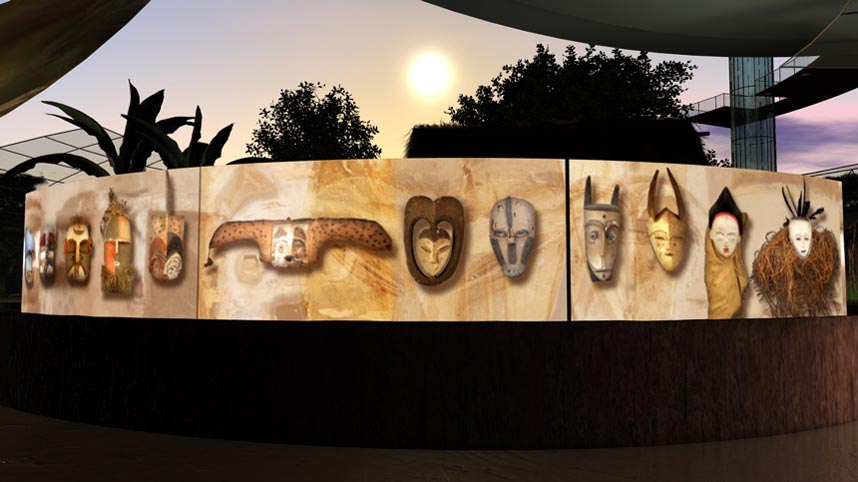
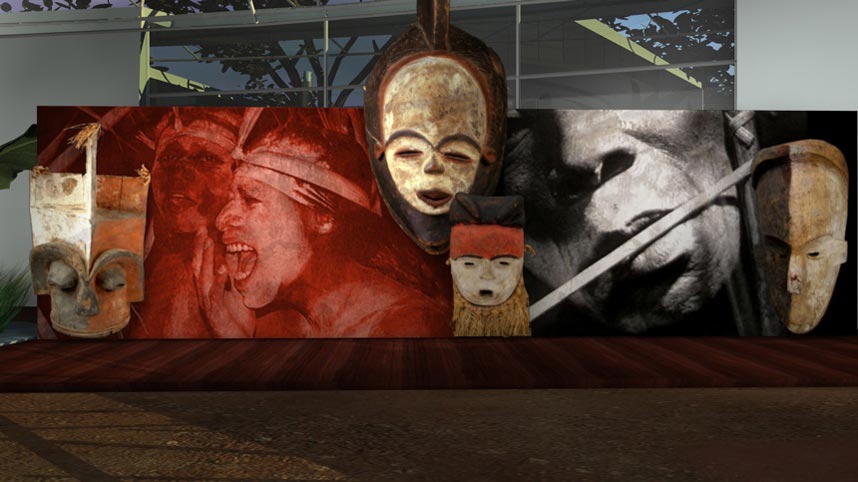
That is the evidence. These masks were not added to the story afterwards. They stood in Gabon's own national museum, in the room it devoted to its most important rites.
Seven masks, one by one
What follows is a style attribution made from the images alone: where each mask's form, carving and finish point to. It is not an authentication. Masks in all of these styles have been copied in workshops for well over a century, and from a photograph nobody can say how old a piece is, who carved it, or whether it was ever danced.
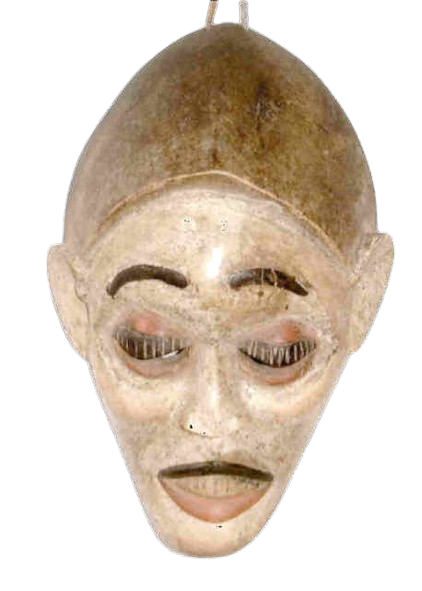
Punu (okuyi), Gabon
Punu and Lumbo peoples · southern Gabon and neighbouring CongoThe white face is kaolin, the clay of the spirit world. The narrow slit eyes, the high arched brows and the domed, lobed coiffure are the signature of the Punu "maiden spirit" mask, often called okuyi. It is the mask that belongs here beyond any doubt: danced on stilts, high above the crowd, it represents the beauty of a woman who has returned from the world of the dead. It is also the mask that European collectors made famous, and that the auction houses still call simply "Gabon".
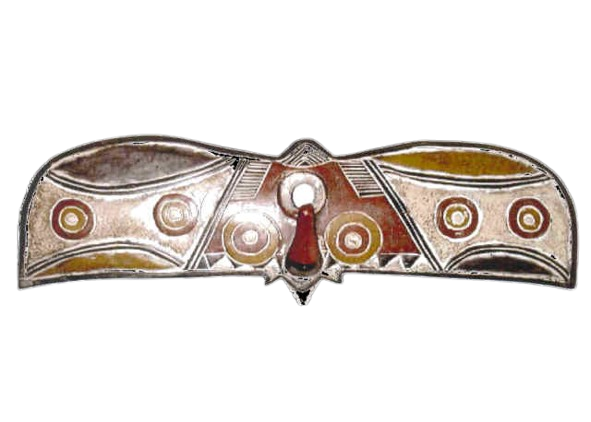
Bwa butterfly or bird mask, Burkina Faso
Bwa people · Burkina Faso and MaliA horizontal plank, painted with concentric circles and geometric patterns, with a hooked beak at the centre. The Bwa carve masks like this as butterflies and birds, the creatures that appear when the rains come. They belong to a world of farming, fertility and purification, a long way from the forest of Gabon, and they are among the most recognisable mask forms of West Africa.
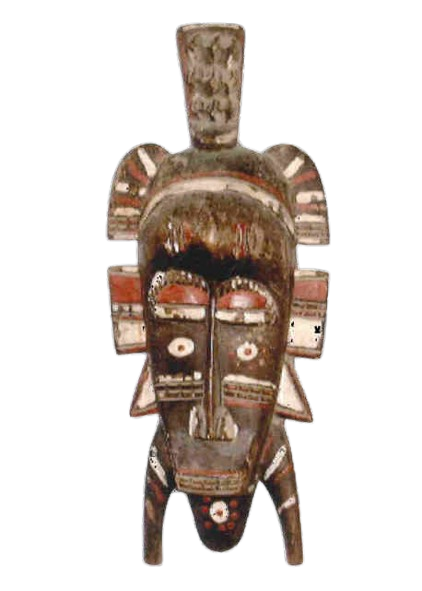
Senufo kpelie mask
Senufo people · northern Côte d'Ivoire, Mali and Burkina FasoA small, finely carved face with a tall crest, flat flanges at the sides and two short "legs" beneath the chin. That combination is the classic Senufo kpelie, a mask linked to the Poro society and danced at funerals and initiations. Three modern states share the Senufo; no colonial border ever ran around them.
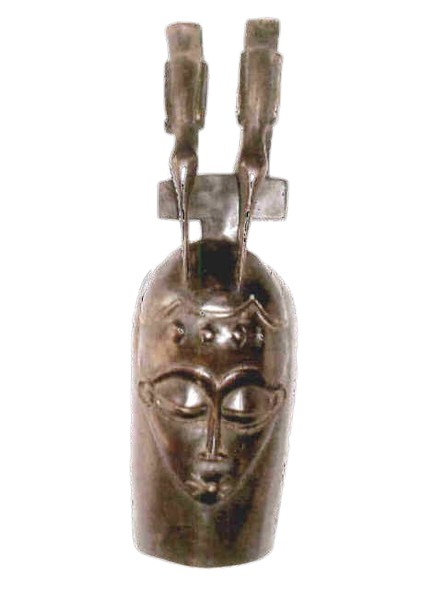
Baule or Guro style, Côte d'Ivoire
Baule and Guro peoples · central Côte d'IvoireA calm, composed face beneath two birds or horns. The serenity of the features and the polished surface point to central Côte d'Ivoire, where Baule and Guro carvers have influenced each other for generations, which is exactly why the two styles are so often impossible to separate from a photograph alone.
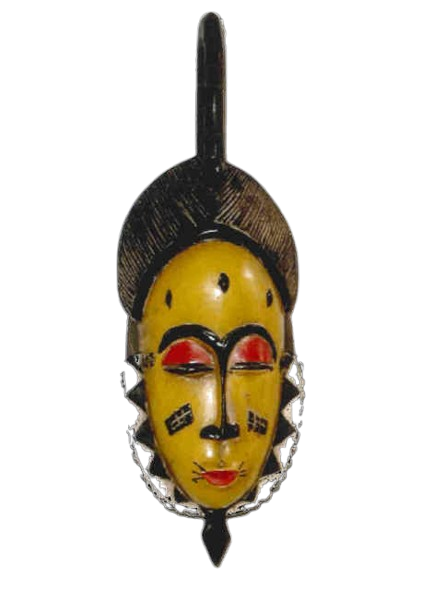
Guro, Baule or Yaure style, Côte d'Ivoire
Guro, Baule and Yaure peoples · central Côte d'IvoireA yellow face with red-rimmed eyes, a black crested coiffure and a zigzag border around the face. Painted masks with this refinement come from the same cluster of neighbouring peoples in central Côte d'Ivoire; the Yaure in particular are known for the delicate frame of zigzags around the face.
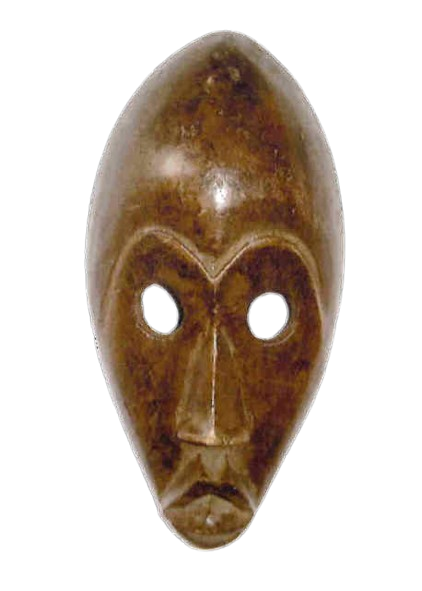
Dan mask
Dan people · western Côte d'Ivoire and LiberiaA plain oval face, round eye holes, a pointed mouth and nothing else. Dan masks are among the purest forms in African carving. The wide round eyes are typical of masks made to see well, and to be worn at speed. The Dan, too, live on both sides of a border that was drawn for them, not by them.
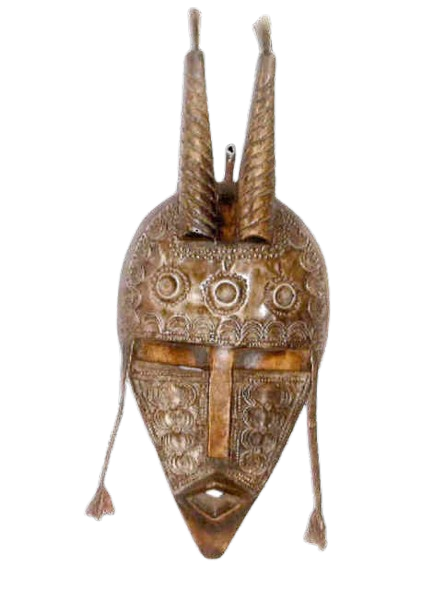
Marka mask, Mali
Marka people · Bamana area of MaliA narrow face clad in embossed metal sheet, crowned by tall horns. Covering wooden masks with sheets of brass or copper is a hallmark of the Marka, who live among the Bamana in Mali. Of all seven, this is the mask that travelled furthest from Gabon: more than three thousand kilometres, across the Sahel and the whole Gulf of Guinea.
Why a Gabonese museum showed West African masks
One mask from Gabon. Six whose styles point to Côte d'Ivoire, Burkina Faso, Mali and Liberia. In a museum that called itself the virtual museum of the arts and traditions of Gabon, that needs an explanation, and the museum's own history offers two.
The first is where the objects came from. The museum's 250-odd works did not all come from Libreville. Alongside the National Museum of Arts and Traditions of Gabon, it drew on private collectors, the Musée de l'Homme in Paris and the Museo Nacional de Antropología in Madrid. European collections of African art are rarely sorted by modern state. A loan from Paris or Madrid could easily bring West African pieces into a Gabonese room.
The second is what the room was for. Everything suggests the masks were shown as a comparison: Gabon's own mask tradition set into its African context, the Punu face beside the faces of the Senufo, the Dan, the Bwa and the Marka. No surviving panel text says so in as many words, so this page states it as an assessment, not a fact. But it is the reading that fits a museum which began with peoples rather than objects, and put its prehistory before its masks.
A national museum that only shows its own nation is a catalogue. A national museum that shows its nation among its neighbours is an education.
Masks do not carry passports
Look at the seven again with a map in mind. The Punu live in Gabon and Congo. The Senufo live in Côte d'Ivoire, Mali and Burkina Faso. The Dan live in Côte d'Ivoire and Liberia. The Bwa live in Burkina Faso and Mali. Not one of these traditions fits inside a single modern state, because the states were drawn at a table in Europe, and the peoples were already there.
A museum that sorts masks by today's borders is quietly accepting those borders as the shape of African culture. Gabon's Rites room, deliberately or not, did the opposite. It let the masks stand together as what they are: one continent's ways of giving a face to the spirit world.
The lesson for Accra
The National Museum of Ghana in Accra once did the same. Its galleries showed Ghanaian objects among objects from across West Africa, and in 2007 I photographed them, among them a mask from Nigeria, possibly Igbo. That mask is no longer on display. Neither, as I saw on site in February 2026, are most of the masks from other West African regions: the permanent exhibition has been thinned, the cases have gone, and what remains is presented as national, inside borders drawn in 1874 and 1957.
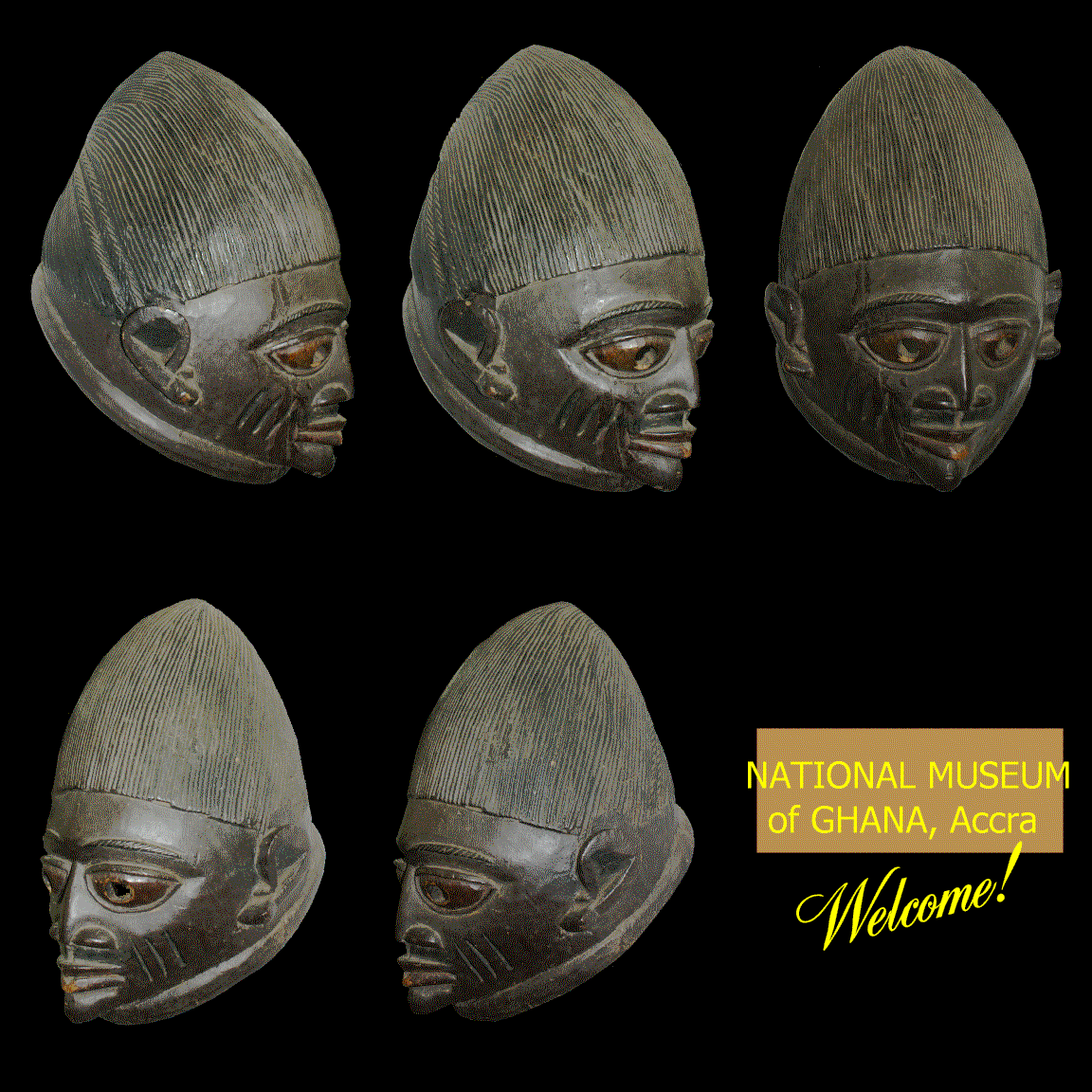
This is my view, as the publisher of this network, and I hold it firmly. A national museum that removes the rest of Africa from its walls is not becoming more Ghanaian. It is becoming more colonial: it takes a border drawn by the Gold Coast administration and treats it as the edge of Ghanaian culture. The Ewe live in Ghana and Togo. The Akan reach into Côte d'Ivoire. The Dagomba, the Mamprusi and the Frafra share their history with Burkina Faso. Ghana's heritage was never only Ghanaian, and its national museum should be the first place to say so.
That is why nationalmuseum.ghana-net.com keeps the African context the museum itself has dropped, with the objects I photographed in 2007, including the ones no longer on display. It is not their style. It does not need to be.
Gabon understood this in 2006, in a museum made of nothing but light. The irony is that the virtual museum is gone, while the real one in Accra still stands, and has chosen to show less of Africa rather than more.
The full story of the museum these masks came from: the forest, the pavilion, Owali the guide, the five rooms, the 2006 opening at UNESCO, and why it vanished when Flash died.
Walk the Gabon Museum →Search our Network. Start here.
Further reading in this network
- A Museum Made of Light: Gabon and the First Virtual Museum in the World
- The National Museum of Ghana, Accra: photographed in 2007, including objects no longer on display
- Ghana Museums: field reports and open letters on Ghanaian heritage sites
- BurkinaVibes.com: Burkina Faso, home of the Bwa
- The independence timeline: every African country, every date
- African radio, live: the whole continent on one page
Sources and references
- Screen captures of the Musée Virtuel des Arts et Traditions du Gabon (gabonart.com), Rites room, recovered from the Internet Archive.
- Images of the seven masks saved by the author from the virtual museum while it was online.
- Contemporary press material issued for the museum, 2006–2008, on its rooms and lenders.
- The author's own photographs from the National Museum of Ghana, Accra (around 2007), and on-site observations in February 2026.
Updated and fact-checked: 4 November 2026.
The attributions of the seven masks are style attributions made from images only; they are not an authentication and say nothing about age, maker or use. That the museum showed the West African masks as a deliberate comparison is the author's assessment; no surviving panel text states it. The mask images and the room screenshots remain the work of Novacom Associés and the Ministry of Culture, Arts and Popular Education of Gabon, and are reproduced here to document a cultural project that can no longer be reached by any other means. Observations on the National Museum of Ghana were made on site by the author and are given as personal observation and opinion; corrections from the institution will be published. This page makes no allegation against any living person.