Anton Wilhelm Amo: An African Philosopher in Enlightenment Europe — And the Long Shadow of Independence
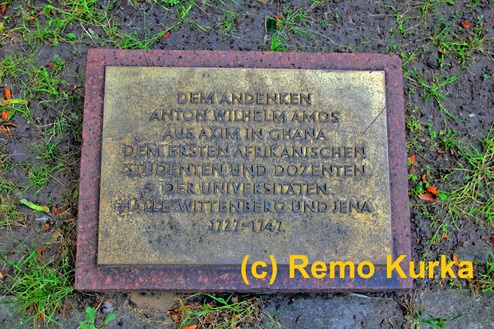
Introduction: A Life That Defied the 18th Century
Remo Kurka - In the early 1700s, when Europe was deep in the age of empire and the trans‑Atlantic slave trade was at its height, a young boy from what is today Ghana arrived in Germany. His name was Anton Wilhelm Amo — and he would become the first known African to earn a doctorate and teach philosophy at a European university.
Amo’s journey is not only a personal triumph. It is a story that forces Europe to confront its own contradictions: Enlightenment ideals of reason and liberty flourishing alongside colonial exploitation. And it is a story that belongs deeply to African independence history — because Amo’s life demonstrates that African intellectual agency did not begin with the 20th‑century liberation movements. It was already present, already brilliant, already resisting.
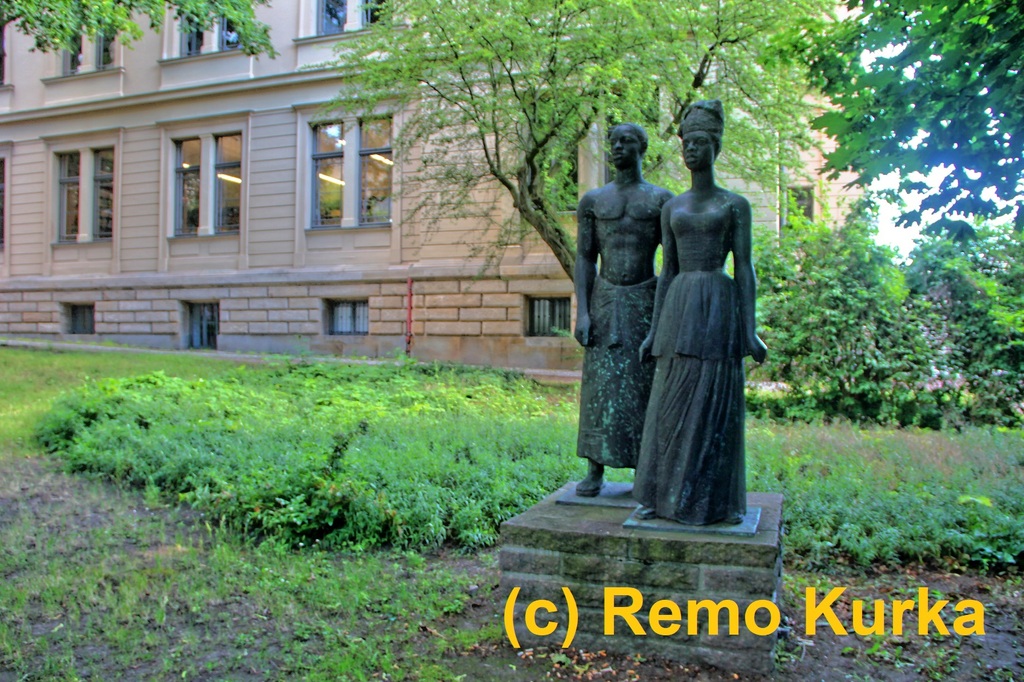
Free Africa memorial statue at Halle university, Germany. Combined with the Anton Wilhelm Amo memorial (c) Remo Kurka, Accra
From Axim to Europe: A Child Taken, A Mind Unbroken
Amo was born around 1703 in the region of Axim, in the western part of present‑day Ghana. As a child, he was taken from the Gold Coast to Europe — likely transported by the Dutch West India Company. But unlike thousands of African children who were trafficked into slavery, Amo’s fate diverged: he was presented to the court of the Dukes of Brunswick‑Wolfenbüttel, baptized, and educated.
This does not erase the violence of his displacement. But it does illuminate something extraordinary: Amo refused to be defined by the circumstances of his capture. Instead, he used the tools of Europe’s own intellectual tradition to carve out a place for himself.
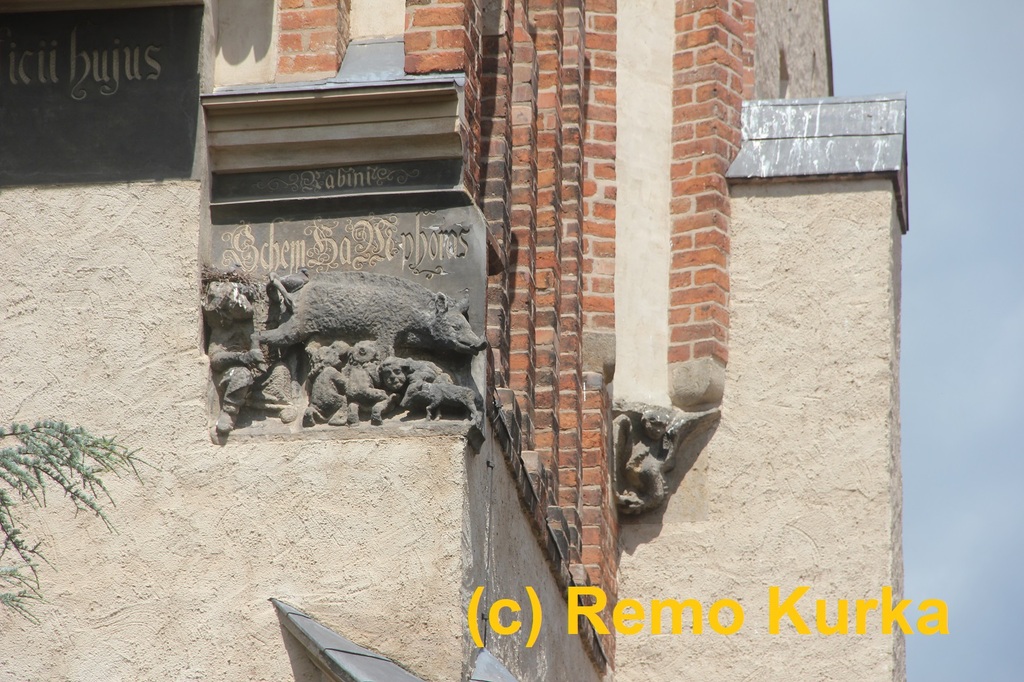
Medieval anti-Jewish display at the Church (Stadtkirche around the year of 1200), Martin Luther visited, and Anton Wilhelm Amo prayed. This is living history. Wittenberg, Germany (c) Remo Kurka
Wittenberg: The First African Scholar of the Enlightenment
Amo began his formal studies at the University of Wittenberg, a city famous for Martin Luther and the Protestant Reformation. Here, he immersed himself in:
Philosophy
Law
Theology
Logic
Mathematics
Latin and Greek
In 1729, he defended a thesis on the legal rights of Africans in Europe — a bold and radical topic for its time. Even in his earliest academic work, Amo challenged the moral foundations of European society.
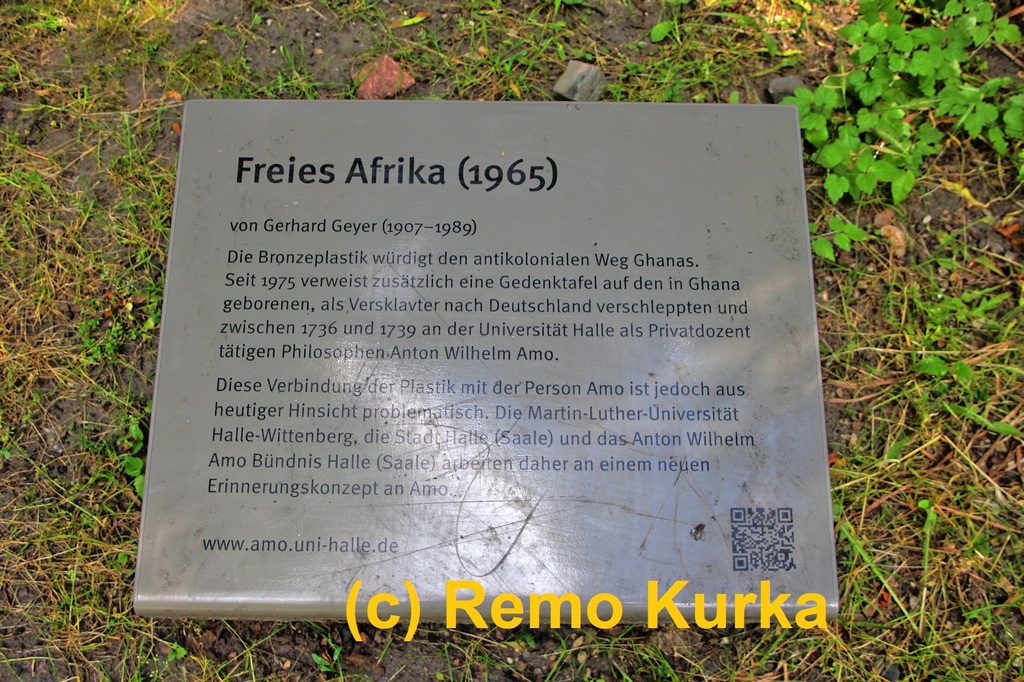
Free Africa (1965) statues, later associated with Anton Wilhelm Amo. However, there is a separate memorial in planning. (c) Remo Kurka, Halle, Germany
Halle: A Professor of Rational Thought
Amo’s intellectual rise continued at the University of Halle, one of the most important centers of Enlightenment scholarship. In 1734, he completed his doctorate in philosophy, becoming the first African known to do so in Europe.
At Halle, he lectured on:
Descartes and rationalism
The philosophy of mind
Logic and metaphysics
Natural law
His most famous work, De Humanae Mentis Apatheia (“On the Impassivity of the Human Mind”), argued that the mind is immaterial and cannot be affected by physical sensations — a sophisticated critique of Cartesian dualism.
Amo was not a curiosity or a token. He was a respected philosopher, cited by peers, debated by students, and integrated into the intellectual life of the university.
Jena: The Final German Chapter
Amo later moved to the University of Jena, another major intellectual center. But by the late 1730s and early 1740s, the climate in Germany was changing. Racism hardened. Satirical plays mocked him. Students harassed him. The Enlightenment’s promise of universal reason proved fragile.
In 1747, Amo made a decision that resonates with the spirit of African independence:He left Europe and returned to the Gold Coast.
Return to Ghana: A Philosopher Comes Home
Amo spent his final years near Axim and Shama, living among the Nzema people. He did not return as a defeated man. He returned as someone who had seen Europe from the inside — its brilliance and its hypocrisy — and chose to reclaim his African identity on his own terms.
He died around 1759, leaving behind a legacy that Europe forgot for centuries but Africa is now reclaiming.
Why Amo Matters for African Independence
Amo’s life is not simply a historical curiosity. It is a prelude to the intellectual independence that would later fuel African liberation movements.
He represents:
1. African intellectual sovereignty before colonial rule
Amo proves that Africans were not passive recipients of European ideas. They shaped, debated, and challenged them.
2. Resistance through knowledge
His thesis on the rights of Africans in Europe was an early critique of racial injustice — long before abolitionist movements gained momentum.
3. The long arc of return
Amo’s journey back to Ghana mirrors the later Pan‑African movements of the 20th century, from Du Bois to Nkrumah.
4. A symbol of what colonialism tried — and failed — to erase
Amo’s brilliance exposes the lie that Africa lacked philosophy, scholarship, or intellectual depth.
A Story Africa Owns
Anton Wilhelm Amo’s life belongs to African history. It belongs to the story of independence — not political independence alone, but intellectual independence, the freedom to think, to question, to define oneself.
His footsteps through Wittenberg, Halle, and Jena are not merely European academic milestones. They are markers of an
African mind navigating, challenging, and ultimately transcending the structures of empire.
Amo is not just a figure of the past. He is a reminder of what Africa has always been capable of — and what it continues to reclaim.
Anton Wilhelm Amo @ Cape Coast CastleAnton Wilhelm Amo @ Ghana-Net.com