Botswana
Independence Day: 30 September 1966. Britain exiled the founding president for marrying an Englishwoman, handed over one of the poorest countries on earth with twelve kilometres of paved road — and then, the year after independence, somebody found diamonds.
Botswana is held up worldwide as Africa's success story: stable, democratic, uncorrupt, prosperous. Most accounts explain this with good governance and leave it there.
The order of events is more interesting than that.
Botswana became independent on 30 September 1966 as one of the poorest countries in the world — poorer than most of its African neighbours. It had roughly twelve kilometres of paved road. It had twenty-two university graduates and about a hundred people who had finished secondary school, in the entire country.
The diamonds at Orapa were found in 1967.
One year after independence.
So the wisdom in this page's title is real, but it is not the vague virtue the phrase suggests. It comes down to a small number of decisions taken by people who did not yet know what was under their feet — and one decision in particular, taken by a man who did.
The Bechuanaland Protectorate was established in 1885, largely to keep the Germans in South West Africa and the Boers of the Transvaal from joining hands across the Kalahari, and to keep Cecil Rhodes's road to the north open.
Britain administered it from Mafeking — which was in South Africa, outside the territory's own borders, until 1965. That single fact tells you how seriously the protectorate was taken.
There was almost no investment. No railway of its own beyond the line running through to Rhodesia. Little schooling. The territory's principal export, as with Upper Volta and France, was labour: Batswana men went south to the mines of the Witwatersrand.
And for decades Britain assumed Bechuanaland would eventually be absorbed into South Africa, along with Basutoland and Swaziland, as the South Africa Act of 1909 envisaged. That transfer never happened, and the reason it never happened is largely that Batswana chiefs — Khama III among them — travelled to London and campaigned against it.
Botswana exists as a separate country because its own chiefs went to England and argued.
Botswana
Seretse Khama was born in Serowe in 1921, grandson of Khama III, and became kgosi — chief — of the Bamangwato at the age of four, with his uncle Tshekedi as regent. He was educated at Fort Hare in South Africa, then at Balliol College, Oxford, and read for the Bar at the Inner Temple in London.
In 1948 he married Ruth Williams, an English clerk from Blackheath.
South Africa had elected the National Party the same year. The Prohibition of Mixed Marriages Act came in 1949. The idea of a black African chief on South Africa's border, married to a white Englishwoman, was intolerable to Pretoria — and to Southern Rhodesia.
Both governments pressed London.
London gave way.
In 1951 the British government exiled Seretse Khama from his own country. In 1952 the incoming Conservative government declared the exile permanent.
Britain also convened a judicial enquiry, chaired by Sir Walter Harragin, ostensibly to establish whether Khama was fit to rule.
Harragin concluded that he was eminently fit to rule.
The British government suppressed the report for thirty years.
And the Commonwealth Relations minister told the House of Commons that the government was not bowing to racial pressure. That statement was untrue, and the suppressed report is the evidence.
Meanwhile the British High Commission instructed the Bamangwato to choose a different chief.
They refused. Repeatedly, through public kgotla assemblies, for years.
Public opinion in Britain eventually turned — the contradiction between having just fought a war against racial ideology and exiling a man for whom he married was not sustainable. In 1956 Seretse and Ruth were allowed home, on condition that he renounce the chieftainship for himself and his children.
He came back as a private citizen. The exile had made him a national figure.
Khama founded the Bechuanaland Democratic Party in 1962, became Prime Minister in 1965, and on 30 September 1966 became the first President of the Republic of Botswana. He was knighted the same year by the sovereign whose government had exiled him.
The capital had to be built from nothing at Gaborone, because the old administrative seat was in another country.
He inherited a state with no army, almost no civil service, no revenue base, and neighbours that were all under white minority rule — South Africa, South West Africa, Rhodesia, and the Portuguese territories beyond. Botswana was landlocked inside apartheid's sphere and entirely dependent on it for trade routes.
That is the position from which everything else was done.
Here is the specific thing, and it deserves to be better known than it is.
Under the colonial arrangement, mineral rights belonged to the individual chiefdoms. That meant that whichever tribal area happened to sit on top of something valuable would own it.
Seretse Khama transferred mineral rights from tribal ownership to national ownership.
He did this before the diamonds were found — and, by the accounts that have followed, with the knowledge that his own people's territory was the promising ground.
He gave away his own clan's future fortune to the state.
That is not an abstract virtue. It is the reason Botswana is not Angola, not the Democratic Republic of the Congo, not Nigeria's Delta. When Orapa turned out to be in Bamangwato country, the revenue belonged to all Batswana, and no region had a reason to fight for it or secede with it.
Almost every resource catastrophe on this continent traces back to a version of the question Khama answered in advance.
In 1967, a De Beers exploration team collected soil samples near the Kalahari. What they found became the Orapa mine — the largest open-pit diamond mine in the world — brought into production in 1971. Letlhakane and later Jwaneng followed; Jwaneng is the richest diamond mine on earth by value.
Botswana then did the second thing right. Rather than granting a concession and taking a royalty, it negotiated — and kept renegotiating, over decades — until it held half of Debswana, the producing company, in equal partnership with De Beers, and a 15 per cent stake in De Beers itself.
An African government, in the 1970s, holding fifty per cent of the company mining its own diamonds. Compare that with almost anywhere else on the continent in the same period.
The revenue was, by African standards and by most standards, spent rather than stolen.
Free universal education. A national health service reaching rural areas. Roads, water, electricity, a functioning civil service. Botswana went from among the poorest countries in the world to upper-middle-income status within a generation — the fastest sustained growth of any country on earth over that period, by some measures.
It also faced, in the late 1990s and 2000s, one of the highest HIV prevalence rates in the world, which threatened to undo all of it. Botswana was among the first African states to provide antiretroviral treatment free through the public health system, at a time when much of the world was still arguing about whether that was affordable. It is one of the genuinely admirable episodes in modern African governance and it is barely known outside the region.
Corruption existed but never became systemic. Elections were held on time. The press was not free in the way it should have been, and the state broadcaster was an instrument of the ruling party — but nobody was disappeared.
Botswana's own oldest inhabitants have not shared in this.
The San — also called Basarwa or Bushmen, and comprising the Gana, Gwi and Bakgalagadi among others — have lived in the Kalahari for tens of thousands of years. The Central Kalahari Game Reserve was created in 1961 explicitly to protect their way of life.
From 1997 the government began removing them from it. The last major eviction was in February 2002, when water supplies were cut off and communities were trucked to resettlement camps outside the reserve. Around a hundred people refused to leave.
The government said the removals were to provide better access to health care and services, and that hunting was incompatible with conservation. The San, and Survival International, said the reserve was wanted for diamond exploration — and diamond exploration in the CKGR did follow.
In 2006 the High Court of Botswana ruled that the evictions had been unlawful and unconstitutional, and that the San had the right to return.
The government then made returning as difficult as it could: permits required for entry, restrictions on hunting, and for years a refusal to let them use the borehole that supplied their water — a matter that required further litigation. Disputes over access have continued since.
A country celebrated for the rule of law removed its indigenous people from their land, was told by its own highest court that it had acted unlawfully, and spent the following years limiting the effect of that judgment.
That belongs on a page with the word wisdom in the title. Leaving it out is what turns history into advertising.
The other quiet fact about Botswana's democracy is that until very recently it had never changed hands.
The Botswana Democratic Party governed continuously from 1966. Seretse Khama until his death in office in 1980; Quett Masire to 1998; Festus Mogae to 2008; Ian Khama — Seretse and Ruth's eldest son — to 2018; then Mokgweetsi Masisi.
Elections were genuine and were held on time. But an electoral system that returns the same party for six decades is not the same thing as a democracy that has been tested.
In October 2024 it was tested.
Voters removed the BDP.
The Umbrella for Democratic Change, a coalition led by Duma Boko — a human rights lawyer, University of Botswana and Harvard Law School, standing for the third time — took 36 parliamentary seats. The BDP took four. The Botswana Congress Party became the official opposition with 15.
Masisi conceded publicly and plainly, saying his party had got it wrong in the eyes of the people, and handed over power. Boko was sworn in on 1 November 2024, nine days after the vote — the first president in Botswana's history not from the BDP.
The reason was economic. Botswana's diamonds account for more than 80 per cent of its export earnings, and the global diamond market has been collapsing under the pressure of cheap laboratory-grown stones. Growth had fallen to around one per cent. Unemployment stood near 28 per cent, concentrated among the young, in a country whose GDP per capita is well above the sub-Saharan average.
An educated generation with no jobs, in a rich country, voted the founders out.
The peaceful transfer is the strongest possible evidence for everything good that is said about Botswana. A party that had governed since independence lost, said so, and left.
The problem it left behind is that the model itself is running out.
Sixty years of development were financed by one commodity, and that commodity is being replaced in a laboratory. Diversification has been the stated policy of every Botswanan government since the 1980s, and it has not happened at anything like the necessary scale. The single decision that saved Botswana from the resource curse in 1967 does not protect it from the resource simply losing its value.
In 2024 the German environment ministry proposed tightening the rules on importing hunting trophies.
President Masisi's response was to threaten to send Germany twenty thousand elephants, and to suggest that Germans might like to try living alongside them.
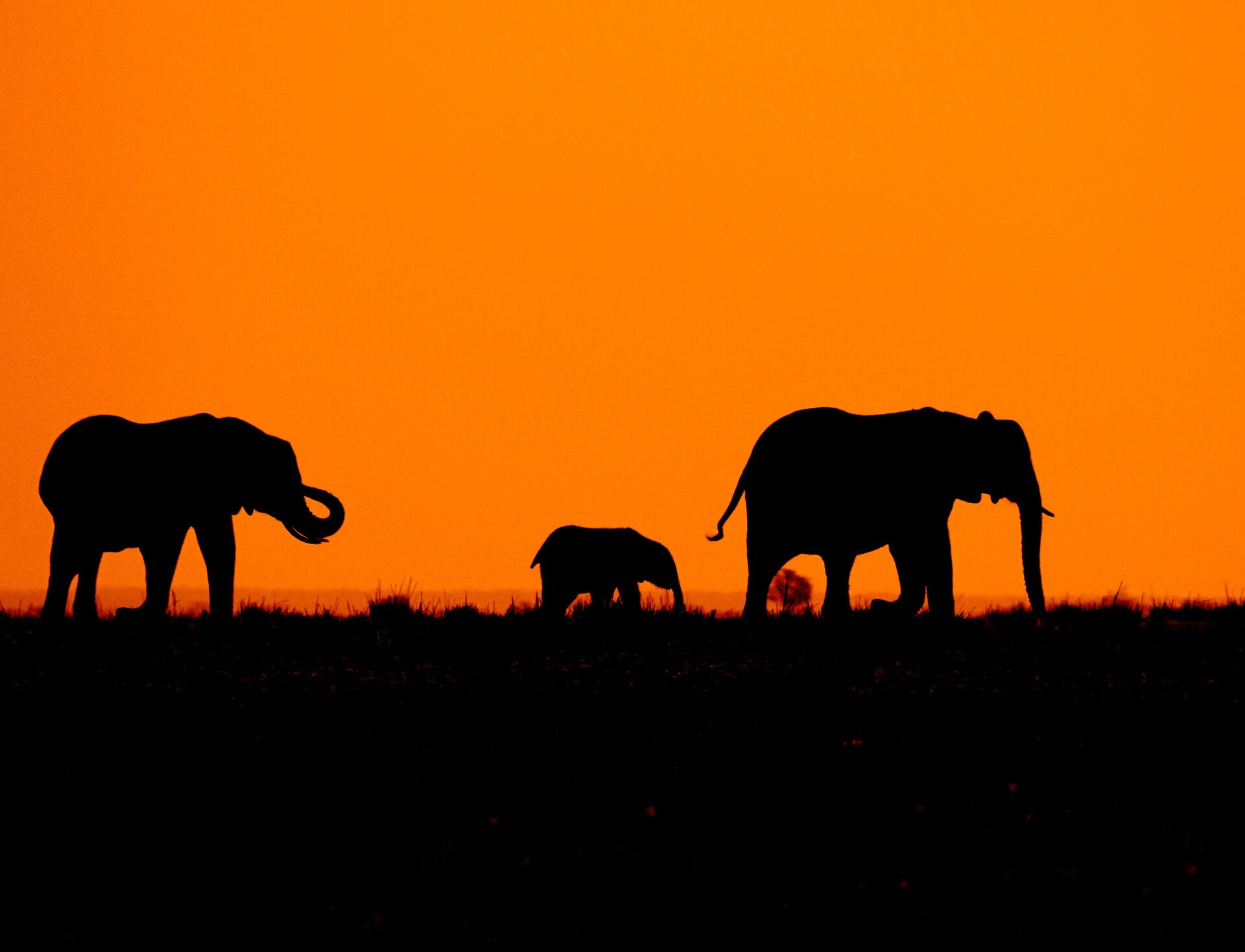
It was theatrical, and it made the point. Botswana has the largest elephant population in the world — well over a hundred thousand animals in a country of about 2.6 million people — and the costs of that fall entirely on rural Batswana, whose crops and occasionally whose lives are lost to them, while the moral positions are taken in European capitals.
Whatever one concludes about trophy hunting, the underlying complaint is legitimate and it is the same complaint running through this whole website: decisions about Africa continue to be made by people who do not live with the consequences.
Because Botswana is the control experiment.
Every other page here describes what mineral wealth did to an African country — Angola, the Congo, Nigeria, Sierra Leone. Botswana had the same temptation and did not succumb, and the reasons are specific and repeatable rather than magical: mineral rights nationalised before anyone knew what was there; a genuine equity stake rather than a royalty; revenue spent on schools and clinics; elections held on time.
And because the founding story is not a story about African wisdom rewarded by a fair world. It is a story about a man his own country wanted, whom Britain removed to keep apartheid South Africa comfortable, on the basis of an enquiry that cleared him and a report Britain then hid for thirty years.
The wisdom was real. So was the luck of finding Orapa in 1967. So was the smallness and relative homogeneity of the population, and the absence of a liberation war. Botswana's success is not a rebuke to countries that failed — the conditions were not the same. But the decisions were still decisions, and they were taken by people who could have chosen otherwise.
There is a statue of Seretse Khama in Gaborone, in a capital that had to be built from scratch because the colonial administration had run the country from another one.
There are the graves of Seretse and Ruth Khama, side by side in the royal cemetery at Serowe.
There is a suppressed British report that said he was fit to rule, held back for three decades while he was kept out of his own country.
There is the largest open-pit diamond mine in the world, in a market that is being undercut by stones grown in factories.
There are San families still negotiating for permits to enter land that their own country's High Court told them, twenty years ago, was theirs.
And there is a president who is not from the founding party — the first in fifty-eight years, elected by young people who could not find work in the richest country of its size on the continent.
Updated and fact-checked: 8 September 2026.
How this page was checked. Dates and figures were verified against the sources listed above. The establishment of the Bechuanaland Protectorate in 1885 and its administration from Mafeking, Seretse Khama's marriage to Ruth Williams in 1948, his exile from 1951 and its extension in 1952, the Harragin enquiry's finding that he was fit to rule and the suppression of that report, the couple's return in 1956 on condition of renouncing the chieftainship, the founding of the BDP in 1962, independence on 30 September 1966, the discovery of diamonds at Orapa in 1967 and the mine's opening in 1971, the establishment of Debswana as an equal partnership with De Beers, Khama's death in office on 13 July 1980, the removal of San communities from the Central Kalahari Game Reserve culminating in February 2002, the 2006 High Court ruling that those evictions were unlawful, the general election of 30 October 2024 and the swearing-in of Duma Boko on 1 November 2024 are as recorded. Figures for the state of the country at independence — around twelve kilometres of paved road, twenty-two university graduates — are the figures commonly cited in the literature and should be read as widely repeated estimates rather than an audited census. The transfer of mineral rights from tribal to national ownership before the Orapa discovery is recorded in published accounts of Botswana's development; the assertion that Seretse Khama acted with prior knowledge that Bamangwato territory was diamond-bearing appears in those accounts and is presented here as reported rather than as independently verified. The government's stated reasons for the CKGR removals and the claims made by San representatives and Survival International are both recorded, because they conflict and this page does not adjudicate between them. This page makes no allegation against any living person.
Written and researched by Remo Kurka · africanindependence.com
We strive to unify diverse narratives from across Africa, showcasing the continent's shared heritage and unique stories.
Our mission is to honor and preserve the history of African cultures and independence movements for future generations.
We provide a platform for innovative exchange of ideas, resources, and insights, understanding that knowledge should be accessible to all.