Reparations, History, and Responsibility: A Clearer Look at Africa’s Role in the Atlantic Slave Trade and the Modern Debate
Author’s Note
(c) 21st June 2026 - This article is written as a historical clarification and a public open letter to institutions, commentators, and policymakers who present the history of slavery and African-European relations in ways that are incomplete, selective, or ideologically framed. Please verify all political information with trusted sources.
1. Introduction: Why Accuracy Matters in the Reparations Debate
The global conversation about reparations has grown louder in recent years. Conferences, speeches, and political statements — including those made in Accra — often frame Africa exclusively as a victim of European exploitation.
But history is not one‑dimensional.
The Atlantic slave trade was a complex, multi‑layered system involving:
European traders
African kingdoms
coastal elites
inland raiding networks
and global economic forces
To understand reparations honestly, we must understand all sides of the system, not only the parts that fit modern political narratives.
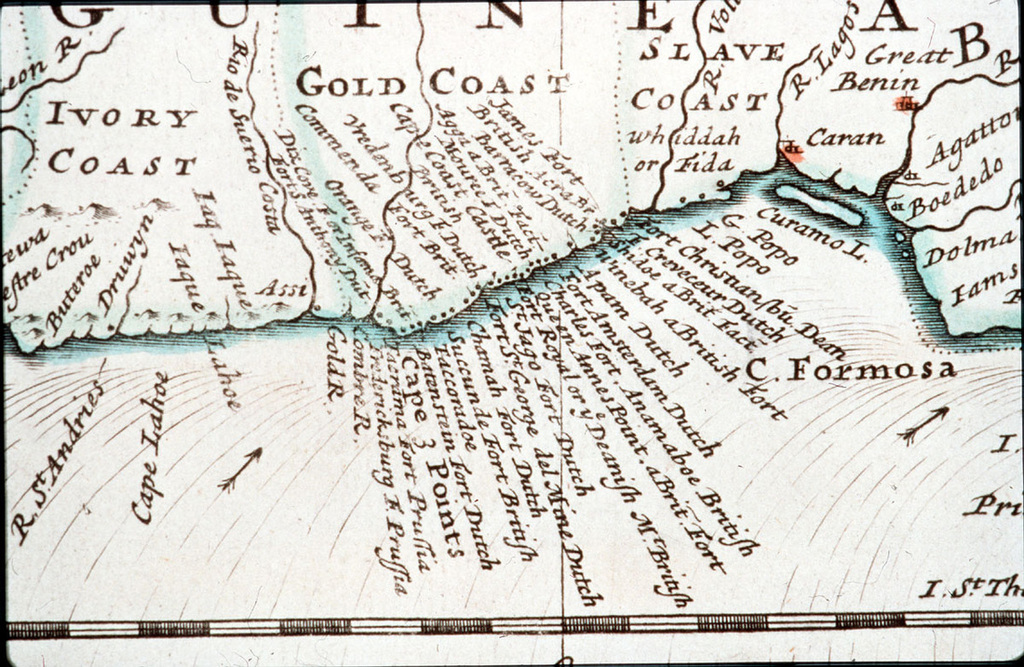
Ivory Coast, Gold Coast, Slave Coast... names we shouldn't forget
2. The Atlantic Slave Trade Was Not a One‑Sided Crime
Modern narratives often imply:
“Europeans captured Africans and shipped them away.”
This is only partially true.
The historical record shows:
European traders rarely penetrated inland Africa.
African states controlled the interior routes.
African rulers negotiated prices, terms, and conditions.
Many African kingdoms grew wealthy and powerful through the trade.
Some African elites resisted the trade — others embraced it.
Key African participants included:
Asante Empire
Dahomey Kingdom
Oyo Empire
Fante Confederacy
Various coastal merchant families
These were not passive victims. They were political actors operating within a global economic system.
This does not excuse European involvement. It simply restores historical accuracy.
3. Why Modern Narratives Often Ignore African Agency
Many modern institutions — including universities, museums, and political conferences — present Africans only as victims.
Why?
Three reasons:
Political simplicity Victim narratives are easier to communicate than complex shared responsibility.
Modern ideological frameworks Contemporary Western politics often divides history into “oppressor vs. oppressed,” which does not fit pre‑colonial African realities.
Avoiding uncomfortable truths Acknowledging African participation complicates modern demands for reparations.
But ignoring African agency is itself a form of historical erasure.
Africans were not passive. They were leaders, traders, negotiators, warriors, and rulers.
4. Reparations: A Debate That Requires Full Context
Some modern African leaders — including those who have spoken at conferences in Accra — argue strongly for reparations from former colonial powers.
This is a legitimate political position. But it must be grounded in complete history, not selective memory.
A balanced view requires acknowledging:
European nations built the transatlantic system.
African kingdoms supplied the majority of captives.
Both sides profited.
Both sides committed violence.
Both sides shaped the system.
Reparations debates that ignore African participation risk becoming politically symbolic, not historically grounded.
⭐ 5. The Danger of Simplifying History for Modern Agendas
When institutions rewrite or distort history — intentionally or unintentionally — they create:
misunderstanding,
resentment,
political polarization,
and a false sense of moral clarity.
Examples include:
claiming Anton Wilhelm Amo was enslaved (without evidence),
misusing historical terms like “Mohr”,
projecting modern gender politics onto 18th‑century African societies,
removing public comments to avoid debate,
presenting Africans only as victims.
These distortions weaken the credibility of legitimate historical grievances.
6. Africans in Germany: A Case Study in Misrepresentation
Two important examples:
A. Franciscus Africanus (Francis of Guinea)
One of the earliest African scholars in Germany — long before colonialism.
B. Anton Wilhelm Amo
A philosopher, lecturer, and academic — not a slave.
Yet modern institutions often:
erase their agency,
reinterpret their status,
or frame them through modern ideological lenses.
This is not history. It is narrative construction.
7. What a Responsible Reparations Debate Should Include
A serious, historically grounded reparations discussion must acknowledge:
1. European responsibility
financing the trade
building the ships
creating the Atlantic system
profiting from forced labor
2. African responsibility
capturing and selling captives
running inland raiding networks
negotiating prices
expanding political power through the trade
3. Shared moral complexity
History is not a morality play. It is a record of human choices — good and bad — across continents.
4. The need for accuracy
Reparations arguments must be based on evidence, not ideology.
8. Truth First - Politics Second:
This article is not against reparations. It is not for reparations. It is a call for historical honesty.
Africans were not only victims. They were also:
rulers,
traders,
negotiators,
and powerful political actors.
Europeans were not the only participants. They were part of a larger system that involved African agency at every level.
If reparations are to be discussed seriously, they must be discussed truthfully.
And truth requires context,complexity, and courage.
Latest Development
For a detailed report on the June 19 Osu Castle reenactment during the Global Reparatory Justice Conference in Accra, read our coverage on GhanaWeb‑News.com:The Osu Castle Reenactment of June 19, 2026 – Powerful Theater or Selective Narrative?